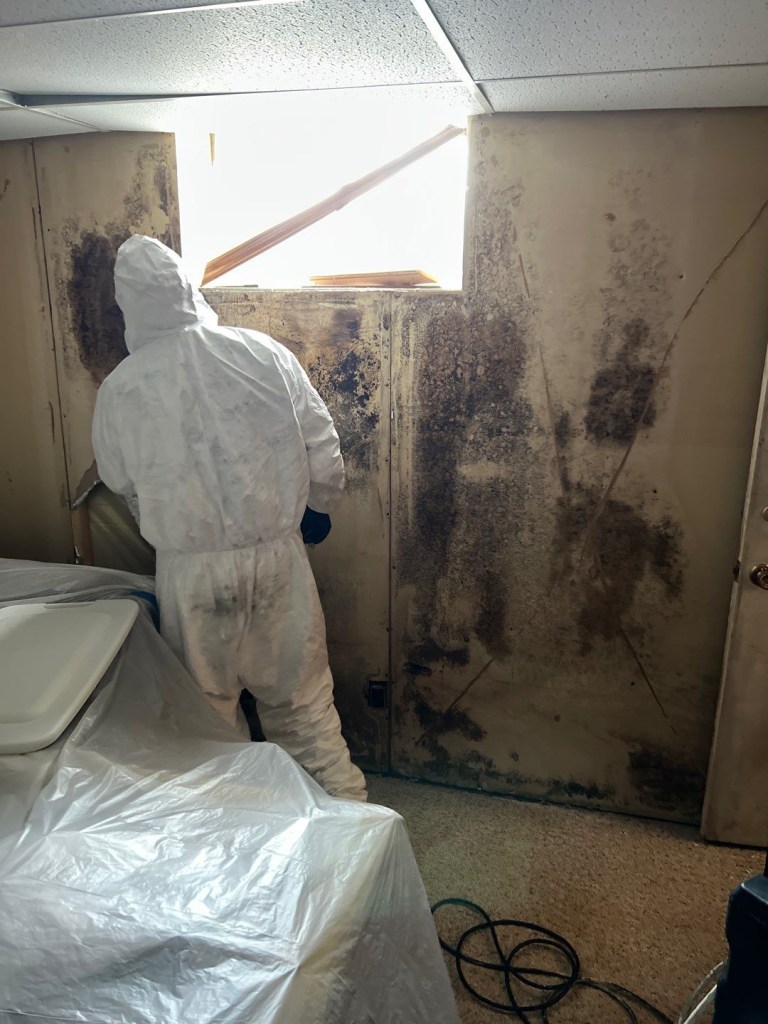
This basement was below grade, the waterproofing product used to seal the exterior when constructed, had degraded and delaminated over time.
The Importance of Exterior and Interior Waterproofing
Waterproofing is an essential aspect of maintaining the structural integrity and longevity of any property. Whether it’s a residential home, a commercial building, or an industrial facility, ensuring that both the exterior and interior are well-protected from water damage can save you significant time, money, and stress in the long run. Here’s why you might need exterior or interior waterproofing and how it can benefit your property.
Understanding Exterior Waterproofing
Exterior waterproofing focuses on protecting the outer structure of a building from water infiltration. This type of waterproofing is crucial for several reasons:
Preventing Structural Damage: Water seepage can weaken the foundation, leading to cracks and structural instability. Exterior waterproofing helps keep water away from the foundation, preserving its strength and durability.
Mold and Mildew Prevention: Moisture can create an ideal environment for mold and mildew growth, which can cause health issues and damage building materials. Exterior waterproofing reduces the risk of mold and mildew by keeping water out.
Enhancing Property Value: A well-maintained, waterproofed exterior can increase your property’s market value. Potential buyers are likely to pay more for a home or building that doesn’t have water damage issues.
Energy Efficiency: Waterproofing can also improve your property’s energy efficiency. Proper insulation and waterproofing can help maintain indoor temperatures, reducing the load on heating and cooling systems.
The Role of Interior Waterproofing
Annual inspections are needed to maintain waterproofing efforts all of our waterproofing installations come with regular maintenance and inspections
Interior waterproofing is equally important and serves as an additional line of defense against water intrusion. Here’s why you might need interior waterproofing:
Basement Protection: Basements are particularly susceptible to water infiltration. Interior waterproofing helps keep basements dry, preventing damage to personal belongings and reducing the risk of mold growth.
Mitigating Existing Water Problems: If your property already has water issues, interior waterproofing can help manage and reduce the impact. This approach includes installing sump pumps, interior drainage systems, and waterproof coatings.
Health and Safety: A dry interior environment is crucial for maintaining good indoor air quality. Waterproofing helps prevent mold and mildew, which can cause respiratory problems and other health issues.
Longevity of Building Materials: Water damage can cause significant wear and tear on building materials. Interior waterproofing protects walls, floors, and other structures from moisture, prolonging their lifespan.
Choosing the Right Waterproofing Solution
Determining whether you need exterior or interior waterproofing—or both—depends on your specific situation. Here are some factors to consider:
Climate and Weather Conditions: Properties in areas with high rainfall or prone to flooding may benefit more from exterior waterproofing.
Age and Condition of the Property: Older properties with existing water damage may require comprehensive interior waterproofing solutions.
Budget and Resources: While exterior waterproofing is typically more expensive, it offers long-term benefits. Interior waterproofing can be a cost-effective solution for managing current issues.
At Property Damage Solutions, we specialize in both exterior and interior waterproofing services. Our team of experts can assess your property, identify potential water intrusion points, and recommend the best solutions to protect your investment.
Conclusion
Waterproofing is not just an optional upgrade; it’s a necessary step to protect your property from the damaging effects of water. Whether you need to safeguard the exterior, manage existing interior issues, or both, professional waterproofing services can help you maintain a safe, dry, and valuable property. Contact us today to learn more about our comprehensive waterproofing solutions and how we can help you achieve peace of mind and long-term property protection.
For more information, visit Property Damage Solutions or give us a call at 859-302-9666. Let us help you keep your property safe from water damage.
Whiskey fungus, also known as Baudoinia compniacensis, is a type of black mold that commonly grows on buildings and structures near whiskey distilleries and other facilities where ethanol is produced. While whiskey fungus itself does not pose significant health risks to humans, it can cause aesthetic and structural damage to buildings and outdoor surfaces. In this article, we’ll explore the causes, effects, and prevention measures for whiskey fungus.
Causes of Whiskey Fungus:
Whiskey fungus thrives in environments with high levels of ethanol vapor, which are typically found near distilleries, breweries, and other industrial facilities where alcohol is produced. The fungus feeds on the ethanol vapors released during the fermentation and aging processes, as well as on other organic compounds present in the air.
Houses Near Distilleries Commonly Need Pressure Washed And Treated
Effects of Whiskey Fungus:
Aesthetic Damage: The most noticeable effect of whiskey fungus is the black staining it creates on outdoor surfaces such as buildings, fences, and trees. These unsightly stains can detract from the appearance of properties and structures, leading to concerns among property owners and communities.
Structural Damage: In addition to aesthetic concerns, whiskey fungus can also cause structural damage to buildings and other surfaces over time. The fungus can penetrate and degrade certain types of building materials, including wood, concrete, and metal, potentially compromising their integrity and longevity.
Environmental Impact: Whiskey fungus releases spores into the air, which can spread and settle on nearby vegetation, soil, and water bodies. While the impact of whiskey fungus on the environment is relatively minimal compared to other types of pollution, it can still contribute to ecological changes in affected areas.
We use a plant based anti microbial in our monthly treatments for clients as well as thorough inspections to the most vulnerable areas of the home. These monthly treatments are for any microbes as well as whiskey fungus.
Prevention of Whiskey Fungus:
Site Selection: When planning the location of a distillery or industrial facility, consider the surrounding environment and potential impacts on nearby properties. Choose sites with adequate distance from residential areas and sensitive ecosystems to minimize the risk of whiskey fungus growth.
Emissions Control: Implement measures to control and reduce emissions of ethanol vapors and other organic compounds from production processes. This may include installing vapor recovery systems, improving ventilation, and optimizing fermentation and aging techniques to minimize emissions.
Surface Treatments: Apply protective coatings or sealants to outdoor surfaces to create a barrier against whiskey fungus growth. These treatments can help prevent the fungus from establishing a foothold and make it easier to clean and remove any staining that does occur.
Regular Maintenance: Implement a regular maintenance schedule to inspect and clean outdoor surfaces for signs of whiskey fungus growth. Promptly remove any black stains using appropriate cleaning methods and products to prevent further spread and damage.
Community Engagement: Foster open communication and collaboration with local communities and stakeholders to address concerns related to whiskey fungus. Educate residents and property owners about the causes and effects of the fungus and involve them in discussions about prevention and mitigation strategies.
Conclusion:
Whiskey fungus may not pose a direct health risk to humans, but its presence can have significant aesthetic and structural impacts on buildings and outdoor surfaces near distilleries and industrial facilities. By understanding the causes of whiskey fungus and implementing proactive prevention measures, we can minimize its effects and preserve the integrity and beauty of our communities.
For professional assistance with whiskey fungus removal and prevention, contact Property Damage Solutions at (859) 302-9666 or email propertydamage123@gmail.com.
We Are IICRC Certified Mold Removal Specialists Call, Text, Email, we do emergency water extraction 24/7/365
Emergency Water Extraction from Basements and Crawlspaces in Richmond, Kentucky
Emergency Water Extraction from Basements and Crawlspaces in Richmond, Kentucky
When disaster strikes, swift action is crucial to minimize damage and restore normalcy. At Property Damage Solutions, we specialize in emergency water extraction services for basements and crawlspaces in Richmond, Kentucky, and surrounding areas of central Kentucky. With our prompt response and expertise, we’ll help you mitigate water damage effectively, ensuring your property is restored to its pre-loss condition.
Expert Water Extraction Services
Our team of skilled professionals is equipped with state-of-the-art equipment and industry-leading techniques to tackle water emergencies of any scale. Whether it’s a burst pipe, flooding, or any other water-related catastrophe, we’re here to provide swift and efficient water extraction services.
Comprehensive Assessment and Planning
Upon arrival at your property, our certified technicians will conduct a thorough assessment of the water damage. We’ll determine the extent of the damage and formulate a tailored plan to address the situation effectively. Our goal is to minimize disruption to your life and property while ensuring thorough water extraction and drying.
Advanced Equipment and Techniques
At Property Damage Solutions, we utilize advanced water extraction equipment, including powerful pumps, extractors, and dehumidifiers, to remove water quickly and efficiently. Our team is trained in the latest techniques for water removal and structural drying, ensuring that your property is dried thoroughly to prevent mold growth and structural damage.
24/7 Emergency Response
Water emergencies can happen at any time, day or night. That’s why we offer 24/7 emergency response services to our clients in Richmond, Kentucky, and the surrounding areas. You can count on us to be there when you need us the most, ready to provide immediate assistance and peace of mind.
Licensed, Bonded, and Insured
Property Damage Solutions is a licensed, bonded, and insured water damage restoration company. We adhere to the highest industry standards and regulations to ensure the safety and satisfaction of our clients. With us, you can rest assured that your property is in capable hands.
Contact Us Today
Call ☎️ 859-302-9666
Don’t let water damage wreak havoc on your property. If you’re facing a water emergency in your basement or crawlspace, don’t hesitate to contact Property Damage Solutions at 859-302-9666. Our team is standing by to provide prompt, professional assistance and help you restore your property to its former glory.
ATP (Adenosine Triphosphate) testing is a method used to determine the presence of biological contamination, such as bacteria, yeast, or mold, in a sample. The test works by measuring the amount of ATP (a molecule found in all living cells) in a sample using a luminometer.
A.T.P Testing With A Luminometer
Typically, the sample is mixed with a reagent called luciferin, which reacts with ATP to produce light. The amount of light produced is proportional to the amount of ATP present in the sample. The light emission is then measured by the luminometer, and the result is reported in relative light units (RLU). High RLU values indicate high levels of ATP and therefore high levels of biological contamination.
ATP testing is widely used in a variety of industries, including food safety, environmental monitoring, and healthcare, as a quick and simple way to assess the level of hygiene and cleanliness in a given area.
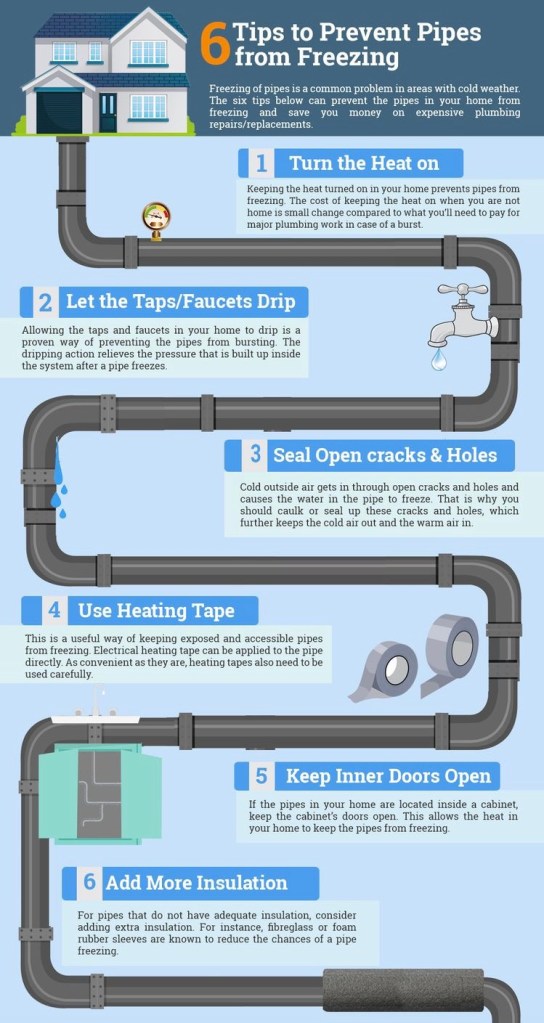
Old man winter is unbearable as it is, water damage from burst frozen pipes in the middle of it can be a nightmare. Should your pipes freeze, the following will give you tips on how to thaw frozen pipes.
Tips on thawing frozen water pipes to parent water damage
If a pipe bursts in your home, you’ll need to act fast to mitigate additional damage. Shut off your water as quickly as possible. This will help minimize the amount of water that seeps out inside your walls. You may also want to shut off power in the affected area of your home. After you’ve taken these precautionary steps, it’s time to call a plumber and start mopping up any mess that’s been caused. Try to remove as much of the water and lingering moisture as you can to avoid mold and mildew buildup. Depending on the severity of your case, you may also need to bring in other professionals to address damage to your walls, carpet, flooring or ceiling.
Shit water off to prevent water damage in case a pipe bursts
How to thaw out pipes
How can you tell if your pipes are frozen? If you turn on the bathroom or kitchen faucet and see only a few drops or a trickle of water, this could indicate that water inside the pipes has frozen – preventing a free flow. But don’t panic. You may be more equipped to deal with the situation than you think. Here’s a quick lesson on how to thaw a frozen pipe.
Step 1. Turn on the faucet
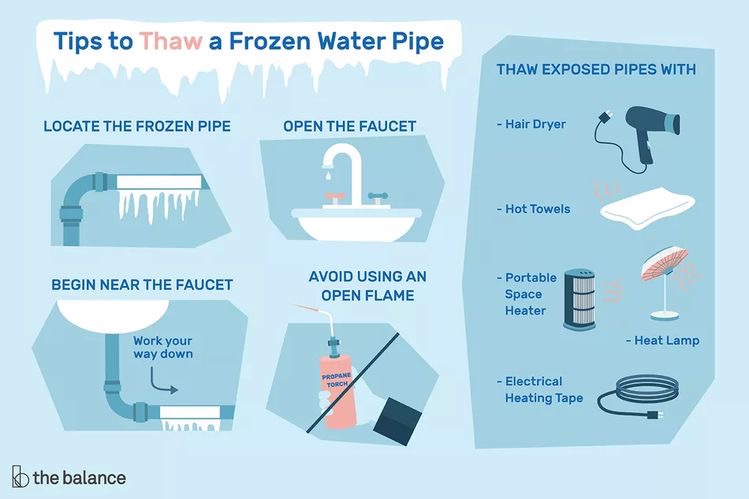
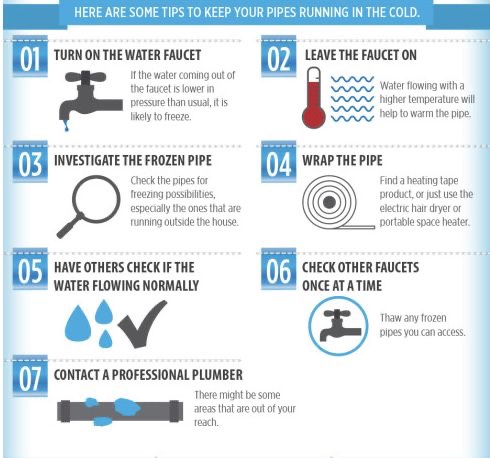
Keep it running. Allowing the faucet to drip even slightly can help prevent a pipe from bursting. It’s simple – when freezing takes place, extreme pressure builds between the faucet and the ice blockage. An open faucet relieves this pressure buildup, in turn preventing a burst from occurring.
Step 2. Apply heat to the frozen area, thermal energy promotes drying.
Slowly apply heat using a hair dryer. There are several ways to do this. You can wrap the pipes in thermostatically controlled heat tape, or you can use an external heat source such as a hair dryer or space heater. Do not use a propane torch as this can damage the pipe and present a fire risk.
If you decide to use a hair dryer, begin directing air close to the faucet end of the pipe and gradually move toward the coldest section. Be careful not to overheat the hair dryer or blow a fuse. Remember, the faucet should be left on while heat is being applied.
Step 3. Continue to apply heat
Don’t stop heating until full water pressure is restored. Even then, it’s a good idea to leave the faucet open for a few minutes after the pipe is thawed. This will give the ice time to completely clear from the line.
Ways to thaw frozen pipes
Step 4. Check all faucets and prevent pipes from freezing in the future
Check each faucet in your home for any other frozen pipes. One frozen pipe may mean that others have been affected as well.
If the problem persists, contact a plumber. You can prevent pipes from freezing again by taking a few simple steps:
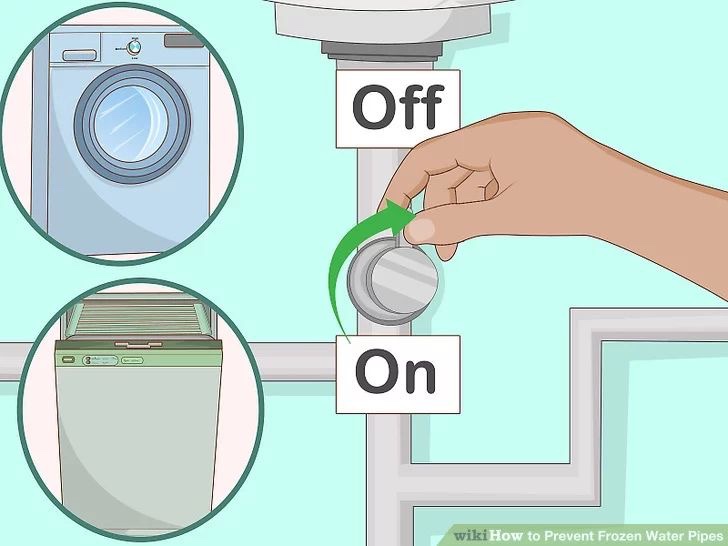
Before traveling, keep the temperature in your home above freezing and turn off all the water to your house.
Be sure to keep all water pipes, especially those close to outside walls, insulated with foam rubber or heating cable.
Keep cabinet doors open to allow air to circulate.
Let your faucets drip cold water – it is harder for a pipe to freeze even if there is a trickle of water flowing through. In order to not waste water, you can collect the drops and reuse it, possibly for cleaning or watering plants.
How long does it take for pipes to unfreeze?
Using any of the handful of methods on how to thaw frozen pipes will typically take about 30 minutes. This can vary depending on the weather, how long the pipe has been frozen and where the pipe is located. Any of these factors can cause the thawing process to take longer.2
And remember, a frozen pipe isn’t the only issue that comes with cold weather. Find out other ways to protect your home during the winter.
Ways to prevent frozen pipes
Quick tip on drying if you have a pipe burst, find out the GPP (grains per pound) inside your home and then outside, you can do this by purchasing a thermometer hydrometer. If the gpp is lower outside than inside, then you can dry your home with what is known in the water damage restoration industry as “an open drying system. Click to check out our mold damage prevention tips there is more tips on how to dry a house out after water damage without water damage restoration equipment.
The cost of mold remediation will depend on many different factors, including your geographic location, the extent of the problem, and the availability of a local contractor. To learn more about how much you should pay for your unique project, read the article below.
Your geographic location. Where you live may have an impact on the cost of mold remediation services. If the cost of living in your area is higher, you should expect higher prices for both materials and labor. Check out Mold Testing & Removal Cost Report to find estimated prices near you. Working with a local contractor can help you avoid expensive travel surcharges.
Emergency calls.Mold remediation contractors will typically charge a premium for emergency services, weekend jobs, and after-hours calls.
Mold inspection. Before hiring a mold mitigation contractor, you may want to enlist the services of an independent mold inspector. The inspector will be able to identify potential problem areas and send samples to the lab for testing. The inspection report can help your contractor tackle the cleanup. For more information, check out our article about the mold inspection cost After the mold has been removed from your home, you may have the inspector come back for a follow-up to ensure the issue has be fully resolved.
Severity of the problem. Mold can be harmful to the health of you and your loved ones, so it’s important to get the issue taken care of as soon as possible. Unfortunately, bigger problems are going to be more expensive to resolve. If the mold has spread to different areas of your home or you are recovering from a serious water emergency, your project may cost a pretty penny.
Restoration services. The mold contractor should take all of the necessary steps to restore, sanitize, deodorize, and decontaminate your home and your belongings. These basic services should be included in your contractor’s quote. The contractor should also ensure the proper disposal of all moldy building materials.
Quality and quantity of materials required. Mold can be found in many different areas of your home, from the attic to the crawlspace. You may need to replace tile, carpet, insulation, air ducts, flooring, and many other home finishes. Once the mold has been removed, you may need to hire a separate contractor to handle some of these projects. The quantity and quality of materials required will factor in to the cost.
Whether it is from a leaking pipe, a hole in the roof, or a natural disaster, water damage restoration is no joke and it needs to be taken care of professionally and promptly. When you realize that you have water damage, you will soon wonder how to go about choosing the right water damage restoration company to help get your property back to the way it should be.
It is not every day that you will seek a water damage restoration company, so it can be difficult to decide how to start and what to look for. That is why we have put together these helpful tips for choosing a water damage restoration company. We want to see your property restored the way you want it to be, and with the right restoration company, you will not have to worry about getting the best results.
🦠
24/7 Availability
Water damage restorationis not something that only needs to be handled from nine to five on weekdays. Water damage can happen at any time, so the right company to help you will be available any time.
In case of an emergency like a flood, the first steps are to get yourself safe, but once you and your family are cleared, you can start seeking water restoration services to get your home back to the way it should be.
Water damage needs to be addressed as quickly as possible, as the longer water sits, the more soaked in it gets and the more damage it causes. The right restoration companywill be able to start helping you as soon as you are ready to get help. Every minute counts for the water damage restoration process, so do not choose a company that will have you wait a few days to start getting to work on getting things back to normal.
They should be able to get someone to come and make an initial inspection within 24 hours, so that they can start addressing any pressing situations. Water damage is an urgent matter, and you want to hire a restoration company that understands this.
💦
Licensed, Bonded, Insured
You often hear about licensed, bonded, and insured contractors, but do you know what it means? It means that a company has taken all the steps to be accountable for their work and has a way of making things right if things go wrong. A water damage restoration company should be licensed, bonded, and insured to perform the restoration work. It shows that they take the job seriously and will do quality work.
If a company has not taken the steps to be licensed, bonded and insured, they may cut corners and skip the important details of doing the job right. You do not want to trust your property to someone who does not believe in taking all the necessary steps to be a real contractor. They may not be accountable for their work and you could end up needing additional help to fix their mistakes.
Choosing a company which is licensed, bonded and insured to do the work will ensure that your property is in good hands and you will have everything back to normal quickly and easily.
Homeowners Insurance
A water damage restoration company needs to have experience helping clients go through the insurance claim process. You have paid good money for your insurance, and you need to make sure that it is protecting you when you need it. A trustworthy restoration company will know all the answers when it comes to the insurance process.
If a company is not familiar with making insurance claims, they could miss an important step and the insurance company could use the mistake to not pay what they should. You need to make sure that the company you choose to help with your water damage restoration will make the insurance process easy for you.
Restoration Plan
The water restoration company you choose needs to be able to explain their plan of action to you in a way that you understand so that you are fully aware of all the work that needs to be done. There will need to be room for unexpected damage or other obstacles, but for the most part, a restoration company will know exactly how to tackle your problem and have a good plan.
It is important that they know exactly how they will get the water out of your property and stop any more water from entering so that no more damage can occur. Then they will have to take steps like evaluating what can be restored and what can not be restored. Then they have to execute the restoration plan.
The company you choose should be able to make a written plan so that you can have an estimate of everything they will be doing. If they can not make a reasonable plan, they may not be the right company to help you restore your property.
Check References
A refutable water damage restoration company will have good references, either from reviews written online or from friends and neighbors. If you are in a flood zone, you can ask someone else who has been affected by past floods which company helped them and if they did a good job.
When you read online reviews, don’t just look at how many stars they got, try to read the reviews and see what people thought of the services. Be wary of new companies or ones without any references,, they may not have the experience it takes to get your property restored the way you want.
Uses the Best Equipment
You need to choose a company that utilizes the best technology and equipment available. Using the right tools will go a long way to making the restoration process faster and easier. New technologies and equipment are coming out all the time and are always improving the outcomes of water damage restoration. You can simply ask the representative of the company what kind of equipment they use and if it is the best equipment for the job water damage restoration company.
A MOLD PROBLEM IS A MOISTURE PROBLEM: Mold spores are everywhere. If mold has grown somewhere in your home or building, it is a sign of excess moisture. IF YOU DO NOT FIX YOUR MOISTURE PROBLEM, YOUR MOLD PROBLEM WILL RETURN. To identify and fix your moisture problem, you may need an expert in one or more of the following areas: plumbing, HVAC, construction, drainage, etc.
OCCUPANTS SHOULD BE PROTECTED: Ask your mold remediation company what methods will be used to protect the occupants of the structure. Often, a containment system will be required to make sure that mold particles are not spread throughout the structure as materials are removed and decontaminated.
SOME MOLD PROBLEMS CAN BE CLEANED UP BY HOMEOWNERS THEMSELVES: See the websites shown above for more information.
A REPUTABLE MOLD REMEDIATION COMPANY SHOULD CARRY INSURANCE: Ask your mold remediation company if it carries insurance. Reliable remediation companies should have general business liability and pollution insurance to protect you in case of a claim later.
CONTACT LOCAL AGENCIES: If you have concerns regarding mold, contact code enforcement in your county to see if there are local guidelines regarding testing or air quality levels. State and local housing codes are enforced by local housing departments or other government agencies that handle code enforcement. These local agencies usually have the authority to inspect rental properties to make sure they meet the standards in the housing code. When a violation is found, the code enforcement agency can take action to make sure the property owner corrects the problem. Depending on the violation and the owner’s response, these enforcement actions may involve orders, citations, fines, administrative hearings, or court cases. Otherwise, you may wish to consult with a mold remediation company.
The Attorney General’s Office does not have enforcement authority to force a landlord or property owner to remediate mold. To view additional mold resources, visit Mold – Cabinet for Health and Family Services (ky.gov) or the Environmental Protection Agency’s page on mold, Mold | US EPA.
MOLD REMEDIATION COMPANY COMPLAINT: If you have a complaint regarding the services of a mold remediation company, please visit our consumer complaint page for additional information about filing a consumer complaint against a business.
Summary of Mold Remediation Regulation, 40 KAR 2:330
Written Contract / Change Order — A written contract is required before work begins. The customer must sign a change order if there is an additional cost or a substantive or material change to the mold assessment and remediation plan.
Inform Customers in Writing — A mold remediation company shall provide written information to customers including:
General Information:
Mold and its potential health risks, using an EPA brochure and a required form to be signed by the customer before entering into a contract.
Areas to be vacated.
Measures customers should use to protect tenants and occupants, such as avoiding work areas.
Indoor environmental professionals, using a required form to be signed by the customer before entering into a contract.
Scope of work, extent of the mold problem, areas to be remediated, and tasks to be performed.
Containment and removal techniques to be used.
A plan to remedy or manage the source of moisture, or a statement that it has not been identified using a required form to be signed by the customer.
How the work will be evaluated.
For commercial or institutional customers, if due to the size and scope of the work it is not practicable to provide a plan and the customer requests in writing that work begin before receiving the plan, a mold remediation company shall provide:
A price list that includes the amounts charged for labor and equipment.
A required information form for the customer.
Updates about the work.
Postremediation Report — At the conclusion of the work, a mold remediation company shall provide the customer with a report including:
Whether visible mold, debris, and unrestorable materials have been removed.
Whether mold odors have been eliminated.
Whether surfaces are free of dust.
Unexpected conditions or events that arose during the work that may impact health or safety or interfere with an appropriate postremediation condition.
Whether salvable structures, systems, and contents have been dried to an appropriate moisture content.
A list of independent indoor environmental professionals if the contract requires sampling or testing to verify the mold remediation.
Postremediation Verification — Any postremediation verification shall be performed by an indoor environmental professional paid directly by and reporting directly to the customer.
Training, Education, and Experience — A mold remediation company shall ensure that its principals and employees have training, education, and experience to perform the tasks and to use equipment, tools, and materials that will be used on the project or are required by this regulation. The training shall at least include safety and health, engineering controls, containment methods, and work practices.
Mold Removal — A mold remediation company shall physically remove mold contamination to return the remediated area to a normal fungal ecology, and return remediated area to a clean condition.
Protective Equipment — A mold remediation company shall ensure that workers use appropriate protective equipment if mold will be disturbed.
Use engineering controls and work practices to prevent exposure to mold.
Determine the type of containment to use during mold remediation and inform the customer.
Control mold contamination as close as practical to its source in order to prevent the spread of mold or mold spores or particles, and minimize dust generation.
Records Retention — A mold remediation company shall maintain a copy[copies] of documents required by this administrative regulation for three years after completing the work. 🦠
When water enters a home or business and causes damage, it’s important to begin the process of water damage restoration as soon as possible. There are Many factors that go intoWater Damage Restoration which will be explained in detail in this article.
Removing the standing water is the first stage in the process of water damage restoration. Immediately after a flood, homeowners should take steps to remove as much of the standing water as possible. This will make it easier for the process of water damage restoration to be successful and more efficient later on. There are several ways to remove standing water, including using buckets or mops, mopping with towels or rags, using large commercial fans and dehumidifiers, opening windows to allow air circulation that will pull moisture out through evaporation or simply throwing towels on top of puddles so they absorb the excess liquid on their own. However it’s done, the process of water damage restoration is easier if standing water is removed as soon as possible.
Stage 2
Once all the standing water has been removed, homeowners need to take steps to remove any items that were damaged by the water. This process may require professional assistance from a fire and water restoration service provider since it involves getting rid of certain types of materials that pose health risks to humans, such as insulation or drywall that have been saturated with stagnant water for more than 48 hours. There are several ways a home’s contents can be disposed of after a water damage. Some companies offer junk removal services while others specialize in debris disposal or complete demolition and rebuilds. When choosing a company for this process, it’s important to choose one that can deal with removing potentially hazardous material.
Stage 3
Finally, once all the water damage mitigation has been eliminated and any contaminated items have been removed from the home. This process should be handled by a professional restoration service provider since there are many techniques that must be used in order for it to be successful. They often use dehumidifiers and disinfectants as part of their process as well as ozone generators. When the water damage is completed you can take steps such as installing additional ventilation, selecting floors that can withstand moisture, using paints that are created to be mold-resistant and drywall made with materials that can resist water damage.
What Are The Main Causes Of Water Damage?
Water damage causes can be either natural or man-made. These causes include things like storms, burst pipes, and leaks from appliances. The causes of water damage can also be a result of a miscellaneous mishap–such as a toilet overflows due to poor flushing habits.
Natural causes of Water Damage
The first type of causes is the natural causes which mostly come from the surroundings of the house such as hurricane or tornadoes or excessive rainfall, all cases can result in moisture seeping into your home’s foundation.
Man-made causes of Water Damage
The causes that are man-made include causes that come from different appliances in your home, such as dishwashers or washing machines. When these appliances overflow, the causes can be devastating to homes because not only does it damage the appliance but also causes widespread moisture in flooring, walls, ceilings and attics making your whole house suffer from mold infestation. The other causes are usually the result of faulty plumbing installations which often occur with poorly done waterproofing jobs or improperly attached supply lines.
Toilet overflows are usually an indication of poor flushing habits but they can also be indications of bigger problems within the plumbing system such as collapsed supply lines or corroded valves.
💦Is Water Damage Covered By My Insurance Company?
The types of water related damages that are covered by a water damage insurance company depends on your policy. In most cases a water related incident, such as a burst pipe or a water heater malfunction will be covered under your homeowners insurance. If water has been allowed to sit for too long it may even qualify for coverage if the home owner, or someone who was responsible for upkeep of the property neglected proper maintenance and preventative measures like draining water from appliances and letting dehumidifiers run after floods. The problem is that water can do tremendous unnoticed damage over time, and not everyone knows how to notice signs of water problems before they become catastrophic damages.
The water damage that is the most difficult to understand is water damage caused by water that has not come into contact with anything else. This water damage comes from hidden sources, like water seeping behind walls or in floors and ceilings. This water related damage can go by unnoticed until there is heavy water damage, which might be too late for your insurance company to cover. For this reason it’s important to take proactive measures in protecting your home against unseen water problems, even if you don’t think they are an issue right now.
One way you can protect your home against water problems is with a moisture sensor. Moisture sensors will notify you when humidity levels get high enough in specific areas of your house where water mold, mildew, and other water damage problems could become a threat. The best way to find out if water damage is covered in your policy is to check with your insurance company.
How To Prevent A Water Damage?
Did you know that every 45 seconds, a water damage occurs in the United States? With such frequent and potentially devastating occurrences, it’s crucial to take preventative measures that will prevent damage from occurring. Water damage is an unfortunate event that can happen anywhere at any time. While preventative steps are crucial, it’s important to be aware of the warning signs for water damage so you know how to prevent a water damage before it occurs.
Here are five preventative tips that will help ease your mind.
1. Keep your gutters clean of debris. If allowed to accumulate, leaves and other natural elements prevent proper drainage of rain water on your property which can lead to a massive amount of water penetrating a weak section in your roof, resulting in a leak!
2. Check the exterior areas for cracks or peeling siding. These common damages can be caused by moisture build up behind deteriorating exterior walls which could lead to water damage if not treated immediately.
3. Inspect the basement for cracks in the foundation, leaks through cement joints and leaking pipes. These are just some telltale signs that preventative measures should be taken before any damage is done.
4. Ensure toilet tanks have been sealed with plumber’s tape when installing new toilets. If left unsealed, over time water will begin to seep through the flapper valve and into the bowl resulting in unsanitary conditions that can lead to preventable damage.
5. Keep your appliances up to date by having them maintained once a year. Older appliances are more likely to malfunction and leak causing preventable.
What are the Hazards of Water Damage?
Water damage has many negative effects on your home. The most obvious is the structural damage that water can cause to your building. However, there are any other dangers in ignoring water damage that you may not have thought of before.
There are many different types of water that can cause significant problems to your home and it’s inhabitants. The foremost danger is biological contaminants that naturally occur in flood waters such as sewage, viruses, and bacteria. The flood water poses a threat for any open wounds or cuts you may have while wading through the flood waters or while cleaning up afterwords. The flood water can also seep into the floorboards and walls causing fungus growths such as mold. The indoor air quality could become very dangerous should mold spores enter your respiratory system .
The other danger is electrocution due to faulty wiring. The last threats are chemical contaminant which you may not be able to see but pose the most risk of long term sickness. The water damage can also cause serious external damage that can be seen very easily such as warping wood floors, rotting walls, and peeling paint. The water damage could also be causing unseen problems within your walls such as rusting metals and rotting wood. The hazards of water damage can cause many issues that could ultimately destroy your home or create a liability issue. The danger of hidden dangers could hinder any future sale you plan on making because the potential buyer may see these things to be too great of an issue to pay for.
How To Find A Great Water Damage Restoration Company
When you find yourself faced with water damage, finding a top-notch restoration company can seem like an intimidating task. Here are some steps to take when searching for the ideal water damage restoration company before disaster strikes.
1) Make Yourself Aware Of The Different Types Of Restoration Companies And What They Specialize In
There are different types of water damage companies specializing in different areas. Some companies do not specialize in any area of restoration, instead they offer general services which cover all varieties of disasters. Other companies might be limited to only one type of service; roofing, mold removal or carpet cleaning for example. By educating yourself on the various types of services offered by these companies you will find it easier to pinpoint the right fit for your situation .
2) Ask The Right Questions
When you find a few companies that specialize in water damage, call them up and ask about their services. Make sure to find out what type of equipment they use, if the staff is certified experts in restoration, if the company has insurance coverage, and an emergency line available 24/7.
3) Find Out About Their Previous Clients And How Well They Were Satisfied With The Service
If it is possible find out how well past clients were satisfied with the service provided by any prospective companies. You can usually find this information through online review sites such as Google or word of mouth from other people have used these services before.
4) Find Out About Their Pricing And Discounts
Price is an important factor in deciding on a company, so find out what price range you are looking at. Also find out if there are any discounts available. Sometimes the cost of restoration can be pricey, especially when dealing with larger commercial properties that have suffered extensive damage. Make sure to find out if it is possible to negotiate the price any time repairs are needed.
5) Contact References
If possible find out if previous clients are willing to act as for this water damage restoration company. If you find clients who were satisfied with their services in the past but do not want them using your name make sure to ask for permission to use their email or phone number so they can answer.
What Is A Public Adjuster ?
Public adjusters are people who help individuals with insurance claims. The main job of a public adjuster is to gather information about the damage that has occurred. The public adjuster then presents that information to the insurance company in order to get a claim paid. A public adjuster can help during any type of claim process. This includes claims such as wind and hail damage, hurricanes,fire damage mitigation, and even theft.
In many cases, homeowners do not have the knowledge or experience necessary to file a claim with their insurance company. A public adjuster can help to make this process easier. They are also there to make sure that the insurance company fully pays for all lost items. This includes things such as furniture, clothing, televisions, and even food. While this may seem like a lot of work, it is important to realize that the public adjuster is only getting paid when the claim is paid in full.
When you purchase homeowners or renter’s insurance, your policy will come with the option to retain an independent representative known as a public adjuster (or private insurance adjustor) to file your claims and negotiate on behalf of yourself and your insurer. They work for their clients, not the insurer, which means they are completely objective when it comes to assessing damages. A public adjuster’s fees are usually paid by the client but not always, and their level of compensation is predetermined by the insured.
To start, a public adjuster has to be hired or contracted. After this initial step is done, they will generally do four things:
1) Evaluation
The first step for a public adjuster is to conduct a thorough evaluation of your property and its condition after the damage occurs. They usually keep the original and then take new photos and videos as needed.
2) Negotiation
Public adjusters generally communicate with both the insurer and other restoration contractors on behalf of their clients during the settlement process. After all the documentation has been gathered, public adjusters then negotiate with insurers to ensure that their clients are being fairly compensated in full for damages. They also represent their clients in court in some cases, but this is rare.
3) Reporting
Public adjusters will submit claims reports to either you or your insurer after negotiations have finished. If they are handling the entire claim on behalf of an insured party, they may also prepare closing reports which are submitted upon final settlement.
4) Documentation
Most public adjuster contracts require that they hold onto important paperwork related to the claim until it is finally resolved. This typically includes copies of estimates, receipts, invoices and other documents related to repairs.
What To Expect From A Water Damage Company
Water damage can happen to anyone. When an unforeseen disaster strikes, a water restoration companies may be the first place people turn to for help. The thought of being displaced from your home because of a flood or an appliance burst is terrifying, but there are expectations that should be met by a reputable company.
To start with, it’s important for customers to know what their expectations will be from a water damage contractors. Most homes have basic procedures in place when water damage has occurred and needs extensive work done. In the case of clothes dryers or dishwasher malfunctions, a quick fix usually does the trick until a technician can come out and take a look at the problem. When dealing with flooding issues caused by things like hurricanes or sewage backups, the expectations are much higher when it comes to restoration. You should expect your water damage company of choice to take their time and do thorough work.
If you’ve ever dealt with flooding in your home, then you know just how overwhelming it is. It’s hard enough to deal with the loss of personal items that can’t be recovered without having to worry about what kind of company you’re hiring to come in and fix everything up again. That’s why expectations must be set in order for expectations to be met. From expectations on how long it will take for someone to come out and survey the problem, all the way down to expectations on what day your flooring or carpet may be ready for install back into your home, there are expectations to be met.
If you need help, don’t hesitate to contact a reputable water damage company. Don’t let nightmares about flooded homes haunt you anymore. If expectations aren’t met, then the nightmare has just begun for you as well as anyone who must deal with such a stressful situation. Make expectations known! And remember: if expectations aren’t met, then you have the right to ask for someone else.
What Are The Different Types Of Water Damage?
Category 1:
Water is clear water from a clean source. This includes water from supply lines, melted ice, condensation, and collections of standing water that has not been contaminated with anything which would make it dangerous.
Category 2 Water:
This categorization of water damage is usually referred to as greywater and includes any form of wastewater that is no longer clear and most often contains detergents, chemicals or soap scum. Category 2 Water can include pre-existing problems such as faulty backflows in plumbing fixtures when these leaks are discovered during an inspection for another issue.
Category 3 Water:
The final category of water damage is known as Blackwater and includes any form of wastewater that contains unsanitary or dangerous materials such as feces, urine and other potentially harmful contaminants. This type of water damage requires immediate attention by a professional to ensure the safety of the occupants and further damages are prevented.
Environmental Testing May Need To Be Done
Before starting a restoration on your home, and depending on your local laws, there may be some Environmental Testing that needs to be done. When looking for a restoration company if it extremely important they understand and know the local laws.
Asbestos Testing
The asbestos test will also indicate if asbestos removal is necessary prior to any renovations or repairs being started. This process will help protect those working on a renovation project from asbestos exposure as well as those that live or work in the building after the project has been completed. After these tests have been done it will help determine what type of containment should be put up around the area and how much asbestos was found following an initial investigation.
If asbestos has been identified during this process it will help indicate if asbestos containing materials should be removed from a property or if there is a need for extra control measures to prevent the spread of asbestos fibers. In some instances removal may not be required but extra care may need to be taken when disturbing material that contains asbestos. These asbestos fibers can be released into the air and asbestos testing is used to determine asbestos levels in order to properly control, contain and isolate asbestos contaminated materials as well as asbestos containing materials.
Why is Asbestos In My Home?
Many common building materials such as insulation and vinyl flooring were made using asbestos up until about 29 years ago. If not removed prior to renovation or demolition work on these surfaces, asbestos dust can become airborne and spread throughout the structure’s ventilation systems into other parts of the building.
Why Is Asbestos Removal Necessary?
When asbestos is disturbed in any way, tiny asbestos fibers are released into the air. Breathing these invisible fibers is what causes asbestos-related illness. The only way to safely remove asbestos is by using special asbestos handling techniques based on scientific studies of how asbestos behave when airborne.
The health risks associated with inhaling asbestos fibers have led most countries to adopt strict asbestos removal requiring proper containment and cleanup of materials known to contain asbestos fiber. These laws apply regardless of whether or not an asbestos-containing material appears damaged or worn, so pre-renovation testing for hazardous asbestos is strongly recommended.
Lead Testing
Lead is a neurotoxin that accumulates in the body over time and can lead to lead poisoning which can cause serious health damage, especially for children who are at risk for learning disabilities because lead affects brain development! Lead testing is necessary so homeowners know how much lead their home contains. Lead is not only dangerous when it’s found in paint or construction materials.
Lead Paint is a major issue in homes built before 1978, but lead poisoning can also be caused by lead found in common household items. Such items include water pipes, lead solder on copper piping, lead-based glazes, and Tiles. Lead paint is the most common cause of lead poisoning today because it’s often not recognized as a health hazard.
Even if a house was built before 1978 there’s no guarantee lead was not used as a construction material. Just because an older house doesn’t appear worn down from lead paint doesn’t mean it isn’t hiding lead paint somewhere on its surface. In fact, the less wear and tear on a house, the more likely it has lead hidden behind its walls.
Lead dust can easily be inhaled and lead particles that find their way into a child’s mouth can lead to lead ingestion. These lead particles can then lead to lead poisoning, which is extremely dangerous and may even be fatal.
How Did Lead Paint Get Into Your Home
In the mid 20th century lead was added to paint in order to speed up drying time and increase resistance to water damage. Lead paint was also more resistant to fungus and mold growth which means it would not have to be repainted often. Unfortunately lead exposure from lead paint can cause physical lead poisoning. Lead poisoning lead to lead-cataracts, lead palsy and lead colic or lead neurosis. Even small amounts of lead can cause serious side effects.
There are regulations put in place by the United States government that limit the amount of lead content in most paints to 0.07% (by weight) meaning lead paint cannot contain more than 0.07% lead by weight per volume of lead paint. By using less than this legal amount of lead it is impossible for most people to experience any type of toxicity from ingestion or contact with objects painted with lead based paint.
Mold Testing is a type of mold examination which uses an industry standard mold sample. This mold testing is carried out on surfaces, air or bulk mold samples to determine the presence and quantity of mold spores within the tested area. Mold tests are usually employed when the property owner suspects there is mold contamination in the home or business.
Mold Testing can be performed by a commercial mold testing laboratory who employs a number of different techniques including: Spore Traps, Tape Swab Samples and Petri Dish Analysis.
There are two ways mold testing can be performed – surface sampling and air sampling. Air samples involve taking mold samples from inside an HVAC system, while air samples are taken directly from the room itself with a special apparatus.
Surface mold testing is usually done on visible mold growth on walls, floors or other surfaces around your property. A mold professional would use surface template including spore trap templates to collect mold for examination purposes. Spore traps are adhesive cards containing spores of certain types of fungi that have been strategically placed.
Where Does Mold Grow?
Mold is a form of fungus. It is a living organism that grows in the form of multicellular filaments called hyphae. Molds have been around for millions of years, with evidence dating back to 3 billion years ago. But it’s only recently that they’ve become dangers to humans as we’ve started building houses and other structures that trap moisture inside their walls, allowing mold spores to take hold and start growing.
Mold can grow on almost any surface as long as there’s humidity present from water damage , rain or leaks from plumbing or roofs. Most surfaces are hospitable to molds because they generally do not have the protective layer bacteria has developed. Once these spores land on a wet or damp spot indoors, they start growing and reproducing by releasing spores into the air. In fact, molds can double their numbers every 24 hours, resulting in a colony of mold within a week’s time. Molds release spores as they grow so many people can be exposed before symptoms even begin to appear. Worse still, symptoms may not be noticeable for weeks after exposure due to the slow-growing nature of molds.
What Are the Dangers of Mold?
The danger of mold are varied because there are thousands of different species that grow indoors, but some commonly known dangers include: respiratory problems like lung damage or infections, skin infections like athlete’s foot or rashes, irritation to eyes and sinuses, immune deficiency issues and cancer. There is also some evidence pointing toward dangers associated with inhaling mold that may be related to memory loss and the inability to think clearly.
Molds can be dangerous because they release airborne spores that people inhale, causing symptoms like nasal congestion, coughing, sneezing and runny nose. These symptoms are often misdiagnosed as simple allergies when in fact these symptoms may indicate dangerous dangers of mold.
What Is The Average Cost Of Water Damage Restoration?
Water damage can happen in many different ways–broken pipes, leaking roofs, flooding from faulty appliances or basement backups, etc. No matter what causes the initial leak that leads to water damage problems, each case requires extensive attention to remove moisture from all surfaces — often several times over a period of days or weeks. The cost of water damage restoration is high because there can be extensive rebuilding and repair to deal with once the problem has been taken care of and the house is dried out.
Water damage cost is usually determined by the extent of damage and how much work has to be done. For example, if only one room has been flooded, you might simply need to replace damaged baseboards and flooring–in this case cost for water damage restoration would be around $2000-$4000 depending on whether your home’s construction is made from wood, carpet or some other material.
On the other hand, there is the cost of removing and repairing walls and ceilings and in some cases, whole rooms must be ripped out and replaced after getting water damaged. If there was a large amount of standing water that had to be drained before any remediation could begin, cost for water damage restoration will be much higher-around $4200-$8500 or more.
Water Restoration services are usually billed to your insurance when work needs to be performed at an insured persons home or business. When the job is complete the billing cycle begins. The Water Restoration company takes care of Sending out Invoices, working with you to set up Payment Terms and Making sure that your Insurance company sends out Payment for Your Water damage loss.
It is very important to make sure you use a Water Damage Company that has been in business for some time and has many references that you can check before you hire them to do Water Restoration work on Your Water Loss. You also want to be sure you ask them what their Billing policy is and how they handle billing with insurance companies on Water damage loss on homes and businesses.
This will help protect both yourself as the insured party, but also help ensure that your Water Restoration Company does not have problems getting paid by your Insurance Company.
Why Is My Mortgage Company Included On My Insurance Pay Out?
When you hear that your mortgage company is included on your insurance pay out, it’s good to find out why. There are many reasons why mortgage companies are included in insurance pay outs, and any one of these can affect you.
As part of the loan contract mortgage companies will often put forward their interest in house insurance claims. If something were to happen to your home they would have a vested interest in the home being repaired to pre-loss condition. Also depending on the mortgage agreement signed by you when you first applied for a mortgage.
You’ll also want to check your local laws and find out if your mortgage company needs to be added onto your insurance claim payout.
How To Get Insurance Payout Funds Released From My Mortgage Company For Repairs?
Be sure to find out why your insurance company added your mortgage company onto your insurance claim. You’ll then want to contact your mortgage company to find out the process of having the funds released.
When you contact the mortgage company, they will first want some proof that you’ve made a payment towards repairs. Be persistent in getting everything ready so that once the mortgage company has the check they can quickly release funds directly into your account without delay.
What Is A Certificate Of Completion (COC)?
A certificate of completion (COC) is documentation given to a client by a contractor, home inspector, or building official after the completion of repairs. COCs are typically required for insurance claims. A of completion should include all necessary information regarding the work performed and when it was completed.
The certificate shall be prepared in letter format and shall contain at least the following information:
1) Name, address, phone number and license number of person performing the work;
2) Date repairs were completed;
3) Specific list of materials installed in compliance with approved construction documents.
Many clients simply receive a faxed or emailed a certificate. However, some will encourage you to create a certificate on an official-looking certificate or certificate template.
When a certificate of completion is requested, it is a good idea to clarify what they are looking for and why they need it. Most likely, it will be for insurance purposes. The certificate of completion can also serve as a record of what was repaired or replaced so that there is no confusion about such things in the future. It would also provide information as to whether or not the work met code requirements and was done properly so there aren’t any issues with possible future inspections.
Do I Need To Disclose A Water Damage When I Sell The Home?
One of the problems you may face when selling your home is having to decide whether or not to Disclose A Water Damage. After all, it’s not like water damage is good for your home, but on the other hand you don’t want to scare away potential buyers by revealing that there was an issue in the past! How much do you need to Disclose A Water Damage when you sell your home?
When looking at Disclosing a water damage when you sell the home , it really depends on how bad the damage is. If only a small section of carpeting got wet from a leaky pipe then no Disclose A Water Damage is necessary. However if there are large sections of soggy flooring throughout the house then it’s probably better to Disclose A Water Damage. Disclose A Water Damage also depends on the extent of the damage; if it’s something that can be easily repaired then Disclose A Water Damage is not necessary, but if there has been serious damage Disclose A Water Damage definitely!
You really need to Disclose A Water Damage before selling your house if you had major water damage in the past or if there has been serious structural damage due to water. You’ll want to check with a Real Estate Agent in your area to go over your local laws as well.
What Is The Water Damage Restoration Process?
The Water Damage Restoration process is many different steps that happen in a very short amount of time, let’s go over each of these steps that most restoration companies offer.
Water Extraction
Water extraction is a water damage restoration process that is used in water damage restoration. It is one of the most important water removal procedures that are utilized in water mitigation. The water extraction begins by removing the water from carpets, floors and other surfaces in a building or home. To water extraction water from a surface, water damage professionals will use professional water extraction tools such as truck mounted water pumps and water vacuums. These water removal machines help in the water removal process when removing water from carpet and other surfaces.
Removal of Wet Building Materials
When water damage occurs, the water can cause extensive damage to building materials. Many water damaged building materials are porous and wet enough to provide an environment for mold growth. Removing water damaged materials is important because water helps mold grow rapidly.
Removing water damaged materials also creates additional costs when repairing water damage or fire damage. For example, removing water damaged sheetrock will result in the need to replace it with new sheetrock. Although most water-damaged drywall can be removed, there are times when removing water-damaged gypsum board is not advisable due to high contamination levels of molds and fungi on its surface. Removing water damaged building materials is essential into drying the home properly.
Drying
The basic goal of drying equipment during Water Damage Restoration is to bring down surface humidity levels in order to prevent any further growth of mold or bacteria which thrive on high humidity. Mold thrives in temperatures above 40°F and relative humidity above 65%. Water Damage Restoration drying equipment are designed to reduce humidity levels to 40% or less.
There are many other types of Water Damage Restoration equipment but the two mentioned below are the most common you’ll find out everyday job sites.
Air movers
The number of Air Movers needed will depend upon the size of the area being dried after Water damage. Air movers are usually placed on the floor or ceiling during a water damage restoration to increase air movement. There are also water damage blower fans that can be used as an alternative. Air movers are also a lower cost option.
Dehumidifiers
Dehumidifiers reduce the amount of moisture in the air. The effectiveness of Water damage restoration drying equipment can be reduced if air humidity levels are too low or too high after a Water damage, so both types of Water Damage Restoration equipment are often required.
How to identify Water Damage Drying Equipment.
Look for Water Damage Restoration equipment that has built-in timers or sensors which automatically turn Water Damage Restoration equipment off when there is no longer any moisture present in the area The drying can also stop when humidity levels have been reduced to the desired level after Water damage.
What Happens To My Personal Belongings?
It is common to have personal items that need to be relocated before a water damage restoration can start. This service is known as a Pack Out. Pack Outs fall under the personal property section of your homeowners policy. Items removed from your home during pack out will need to be dried, cleaned, and properly repaired or restored before they can be returned.
Pack Out
A pack out is the process of removing items from a home after it has been flooded by water. A pack out can be performed by experienced pack-out teams or, more commonly, by the homeowner themselves with assistance from friends and family. It’s important to note that pack outs should only take place after the initial damage has been inspected and repaired by professionals. Unqualified packers can risk further damage to your property if they attempt pack out procedures on their own.
Pack out teams are equipped to pack out almost anything, including furniture, appliances, electronics, contents of kitchen cupboards or pantries, and more. Items that can’t be packed out should be labelled.
The pack- out process itself usually takes place over the course of a few days after the initial water damage has been repaired by professionals. During this time, packers will remain on site to continue drying remaining belongings using fans while you pack out other items.
The pack out process can be physically and emotionally draining for homeowners. To minimize the stress involved in relocating belongings, packers should pack personal items that are easily accessible for removal first . These include fragile or high-value property such as artwork, jewelry cases, suitcases, boxes with sentimental value (ie: photo albums), and more.
Drying is done, now you need to Rebuild
A rebuild is the process of restoring a home or business that has been damaged by a flood, storm, pipe burst, electrical fire, sewage back-up and other types of water damage. Ideally, you’ll rebuild after a Water Damage as quickly as possible so that life can return to normal. But there are many factors involved in rebuilding after water damage.
A rebuild can take anywhere from four months to a year, depending on the extent of the damage and how quickly you rebuild. Sometimes rebuilds can go much faster if they’re planned for in advance, such as when the owner has already secured temporary housing or is planning to rebuild in stages once certain conditions are met.
These types of rebuilds may even be completed in less than four months if there was no structural damage and minimal renovation work is needed. The insurance company might also decrease your rebuilding costs if it realizes that you were taking steps before their adjuster arrived to protect your home from further flood-related damages, such as by boarding up broken windows and doors or putting down sandbags around your house.
You should also work closely with a contractor or a builder who can help keep your rebuild on track and ensure that quality materials are used.
Ready To Start Your Water Damage Restoration Project?
Water mitigation happen to almost everyone at some point in life. But knowing who to call and all the questions to ask you can make this process a little less stressful, and get your home back into working order quicker.
One of the main reasons people construct homes is to have a place that is safeguarded against rain, snow, sleet, and extreme temperature changes. But when the foundation has cracks or the septic system backs up, your home can quickly flood, damaging the flooring, walls, and furniture. Water damage can even affect the structural integrity of the home.
To prevent further damage, a homeowner has about 24 to 48 hours to clean up the water, dry the space, sanitize to prevent mold and mildew growth, and remove any items or material beyond saving. An experienced DIYer can usually handle cases of minor flooding. Still, when the water damage is too severe to manage independently, it’s a good idea to hire one of the best water damage restoration services. This list of top-quality water damage restoration companies is a great place to start. Homeowners will also find additional information about what these companies offer and what to look for in a top-tier restoration service.






 Call ☎️ 859-302-9666




 Water Damage Mitigation Company In Winchester KY