-
cigarette smoke odor removal, fire damage restoration, lexington, kentucky, mold inspection company, mold removal service, smoke odor removal, Water Damage, water damage cleanup, water damage cleanup company, water damage mitigation, water damage mitigation company, water damage restoration, water removal service near me, water restoration company
7 Hidden Signs of Water Damage in Your Home or Business
Serving All Of Central Kentucky


We are an IICRC Water Damage Restoration Master Restorers

Book Now

We Are Also IICRC Certified Master Fire Damage Restorers Click To Book
24 HR Water Removal Services Click To Call
-
The Importance of Exterior and Interior Waterproofing

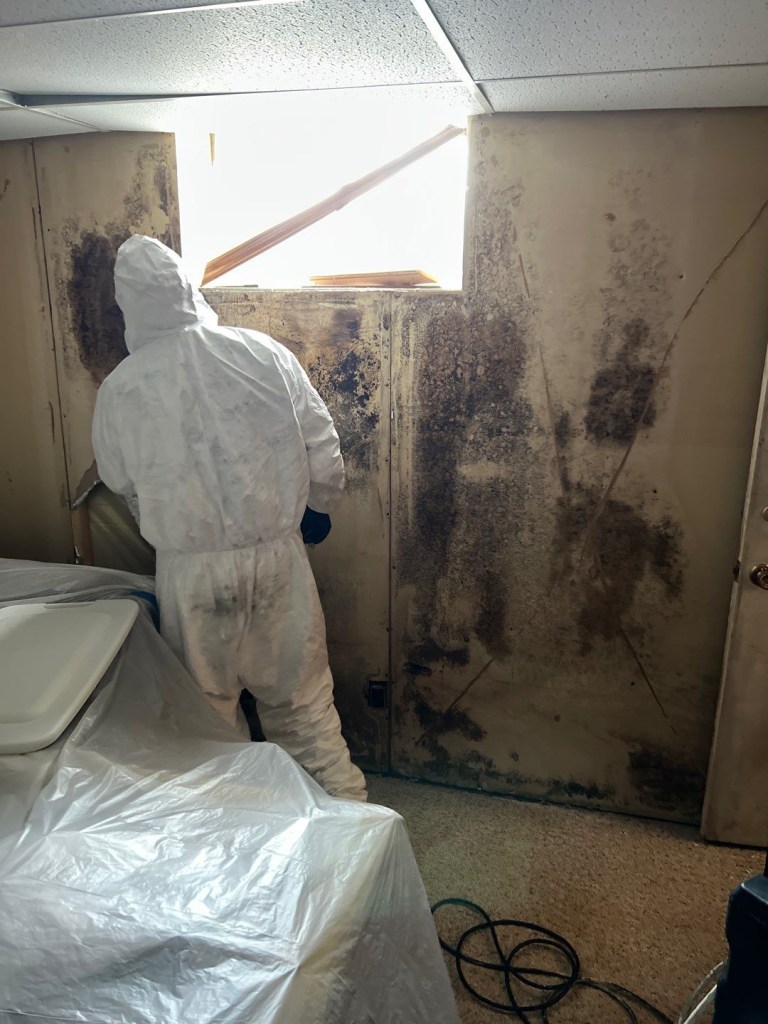
This basement was below grade, the waterproofing product used to seal the exterior when constructed, had degraded and delaminated over time. The Importance of Exterior and Interior Waterproofing
Waterproofing is an essential aspect of maintaining the structural integrity and longevity of any property. Whether it’s a residential home, a commercial building, or an industrial facility, ensuring that both the exterior and interior are well-protected from water damage can save you significant time, money, and stress in the long run. Here’s why you might need exterior or interior waterproofing and how it can benefit your property.
Understanding Exterior Waterproofing
Exterior waterproofing focuses on protecting the outer structure of a building from water infiltration. This type of waterproofing is crucial for several reasons:
- Preventing Structural Damage: Water seepage can weaken the foundation, leading to cracks and structural instability. Exterior waterproofing helps keep water away from the foundation, preserving its strength and durability.
- Mold and Mildew Prevention: Moisture can create an ideal environment for mold and mildew growth, which can cause health issues and damage building materials. Exterior waterproofing reduces the risk of mold and mildew by keeping water out.
- Enhancing Property Value: A well-maintained, waterproofed exterior can increase your property’s market value. Potential buyers are likely to pay more for a home or building that doesn’t have water damage issues.
- Energy Efficiency: Waterproofing can also improve your property’s energy efficiency. Proper insulation and waterproofing can help maintain indoor temperatures, reducing the load on heating and cooling systems.
The Role of Interior Waterproofing

Annual inspections are needed to maintain waterproofing efforts all of our waterproofing installations come with regular maintenance and inspections Interior waterproofing is equally important and serves as an additional line of defense against water intrusion. Here’s why you might need interior waterproofing:
- Basement Protection: Basements are particularly susceptible to water infiltration. Interior waterproofing helps keep basements dry, preventing damage to personal belongings and reducing the risk of mold growth.
- Mitigating Existing Water Problems: If your property already has water issues, interior waterproofing can help manage and reduce the impact. This approach includes installing sump pumps, interior drainage systems, and waterproof coatings.
- Health and Safety: A dry interior environment is crucial for maintaining good indoor air quality. Waterproofing helps prevent mold and mildew, which can cause respiratory problems and other health issues.
- Longevity of Building Materials: Water damage can cause significant wear and tear on building materials. Interior waterproofing protects walls, floors, and other structures from moisture, prolonging their lifespan.
Choosing the Right Waterproofing Solution
Determining whether you need exterior or interior waterproofing—or both—depends on your specific situation. Here are some factors to consider:
- Climate and Weather Conditions: Properties in areas with high rainfall or prone to flooding may benefit more from exterior waterproofing.
- Age and Condition of the Property: Older properties with existing water damage may require comprehensive interior waterproofing solutions.
- Budget and Resources: While exterior waterproofing is typically more expensive, it offers long-term benefits. Interior waterproofing can be a cost-effective solution for managing current issues.
Professional Waterproofing Services

IICRC Water-Mold-Smoke-Fire Damage Certified Professionals Call ☎️ 859-267-3482 At Property Damage Solutions, we specialize in both exterior and interior waterproofing services. Our team of experts can assess your property, identify potential water intrusion points, and recommend the best solutions to protect your investment.
Conclusion
Waterproofing is not just an optional upgrade; it’s a necessary step to protect your property from the damaging effects of water. Whether you need to safeguard the exterior, manage existing interior issues, or both, professional waterproofing services can help you maintain a safe, dry, and valuable property. Contact us today to learn more about our comprehensive waterproofing solutions and how we can help you achieve peace of mind and long-term property protection.
For more information, visit Property Damage Solutions or give us a call at 859-302-9666. Let us help you keep your property safe from water damage.
-
Understanding Whiskey Fungus: Causes, Effects, and Prevention

Whiskey Fungus Is A Black Mold Whiskey fungus, also known as Baudoinia compniacensis, is a type of black mold that commonly grows on buildings and structures near whiskey distilleries and other facilities where ethanol is produced. While whiskey fungus itself does not pose significant health risks to humans, it can cause aesthetic and structural damage to buildings and outdoor surfaces. In this article, we’ll explore the causes, effects, and prevention measures for whiskey fungus.
Causes of Whiskey Fungus:
Whiskey fungus thrives in environments with high levels of ethanol vapor, which are typically found near distilleries, breweries, and other industrial facilities where alcohol is produced. The fungus feeds on the ethanol vapors released during the fermentation and aging processes, as well as on other organic compounds present in the air.

Houses Near Distilleries Commonly Need Pressure Washed And Treated Effects of Whiskey Fungus:
- Aesthetic Damage: The most noticeable effect of whiskey fungus is the black staining it creates on outdoor surfaces such as buildings, fences, and trees. These unsightly stains can detract from the appearance of properties and structures, leading to concerns among property owners and communities.
- Structural Damage: In addition to aesthetic concerns, whiskey fungus can also cause structural damage to buildings and other surfaces over time. The fungus can penetrate and degrade certain types of building materials, including wood, concrete, and metal, potentially compromising their integrity and longevity.
- Environmental Impact: Whiskey fungus releases spores into the air, which can spread and settle on nearby vegetation, soil, and water bodies. While the impact of whiskey fungus on the environment is relatively minimal compared to other types of pollution, it can still contribute to ecological changes in affected areas.

We use a plant based anti microbial in our monthly treatments for clients as well as thorough inspections to the most vulnerable areas of the home. These monthly treatments are for any microbes as well as whiskey fungus. Prevention of Whiskey Fungus:
- Site Selection: When planning the location of a distillery or industrial facility, consider the surrounding environment and potential impacts on nearby properties. Choose sites with adequate distance from residential areas and sensitive ecosystems to minimize the risk of whiskey fungus growth.
- Emissions Control: Implement measures to control and reduce emissions of ethanol vapors and other organic compounds from production processes. This may include installing vapor recovery systems, improving ventilation, and optimizing fermentation and aging techniques to minimize emissions.
- Surface Treatments: Apply protective coatings or sealants to outdoor surfaces to create a barrier against whiskey fungus growth. These treatments can help prevent the fungus from establishing a foothold and make it easier to clean and remove any staining that does occur.
- Regular Maintenance: Implement a regular maintenance schedule to inspect and clean outdoor surfaces for signs of whiskey fungus growth. Promptly remove any black stains using appropriate cleaning methods and products to prevent further spread and damage.
- Community Engagement: Foster open communication and collaboration with local communities and stakeholders to address concerns related to whiskey fungus. Educate residents and property owners about the causes and effects of the fungus and involve them in discussions about prevention and mitigation strategies.
Conclusion:
Whiskey fungus may not pose a direct health risk to humans, but its presence can have significant aesthetic and structural impacts on buildings and outdoor surfaces near distilleries and industrial facilities. By understanding the causes of whiskey fungus and implementing proactive prevention measures, we can minimize its effects and preserve the integrity and beauty of our communities.
For professional assistance with whiskey fungus removal and prevention, contact Property Damage Solutions at (859) 302-9666 or email propertydamage123@gmail.com.
We Are IICRC Certified Mold Removal Specialists Call, Text, Email, we do emergency water extraction 24/7/365
-

Emergency Water Extraction from Basements and Crawlspaces in Richmond, Kentucky
Emergency Water Extraction from Basements and Crawlspaces in Richmond, Kentucky
When disaster strikes, swift action is crucial to minimize damage and restore normalcy. At Property Damage Solutions, we specialize in emergency water extraction services for basements and crawlspaces in Richmond, Kentucky, and surrounding areas of central Kentucky. With our prompt response and expertise, we’ll help you mitigate water damage effectively, ensuring your property is restored to its pre-loss condition.
Expert Water Extraction Services
Our team of skilled professionals is equipped with state-of-the-art equipment and industry-leading techniques to tackle water emergencies of any scale. Whether it’s a burst pipe, flooding, or any other water-related catastrophe, we’re here to provide swift and efficient water extraction services.
Comprehensive Assessment and Planning
Upon arrival at your property, our certified technicians will conduct a thorough assessment of the water damage. We’ll determine the extent of the damage and formulate a tailored plan to address the situation effectively. Our goal is to minimize disruption to your life and property while ensuring thorough water extraction and drying.
Advanced Equipment and Techniques
At Property Damage Solutions, we utilize advanced water extraction equipment, including powerful pumps, extractors, and dehumidifiers, to remove water quickly and efficiently. Our team is trained in the latest techniques for water removal and structural drying, ensuring that your property is dried thoroughly to prevent mold growth and structural damage.
24/7 Emergency Response
Water emergencies can happen at any time, day or night. That’s why we offer 24/7 emergency response services to our clients in Richmond, Kentucky, and the surrounding areas. You can count on us to be there when you need us the most, ready to provide immediate assistance and peace of mind.
Licensed, Bonded, and Insured
Property Damage Solutions is a licensed, bonded, and insured water damage restoration company. We adhere to the highest industry standards and regulations to ensure the safety and satisfaction of our clients. With us, you can rest assured that your property is in capable hands.
Contact Us Today
 Call ☎️ 859-302-9666
Don’t let water damage wreak havoc on your property. If you’re facing a water emergency in your basement or crawlspace, don’t hesitate to contact Property Damage Solutions at 859-302-9666. Our team is standing by to provide prompt, professional assistance and help you restore your property to its former glory.
-
How Does A.T.P testing work

The following article explains; How Does A.T.P testing work.
ATP (Adenosine Triphosphate) testing is a method used to determine the presence of biological contamination, such as bacteria, yeast, or mold, in a sample. The test works by measuring the amount of ATP (a molecule found in all living cells) in a sample using a luminometer.

A.T.P Testing With A Luminometer Typically, the sample is mixed with a reagent called luciferin, which reacts with ATP to produce light. The amount of light produced is proportional to the amount of ATP present in the sample. The light emission is then measured by the luminometer, and the result is reported in relative light units (RLU). High RLU values indicate high levels of ATP and therefore high levels of biological contamination.
ATP testing is widely used in a variety of industries, including food safety, environmental monitoring, and healthcare, as a quick and simple way to assess the level of hygiene and cleanliness in a given area.
-
lexington, kentucky, mold damage, mold inspection company, mold remediation, mold removal, richmond,Kentucky, Water Damage, water damage cleanup, water damage cleanup company, water damage mitigation, water damage mitigation company, water damage restoration, water removal service near me, water restoration company
How to thaw frozen pipes

For emergency water removal call ☎️ (859)302-2702
Old man winter is unbearable as it is, water damage from burst frozen pipes in the middle of it can be a nightmare. Should your pipes freeze, the following will give you tips on how to thaw frozen pipes.
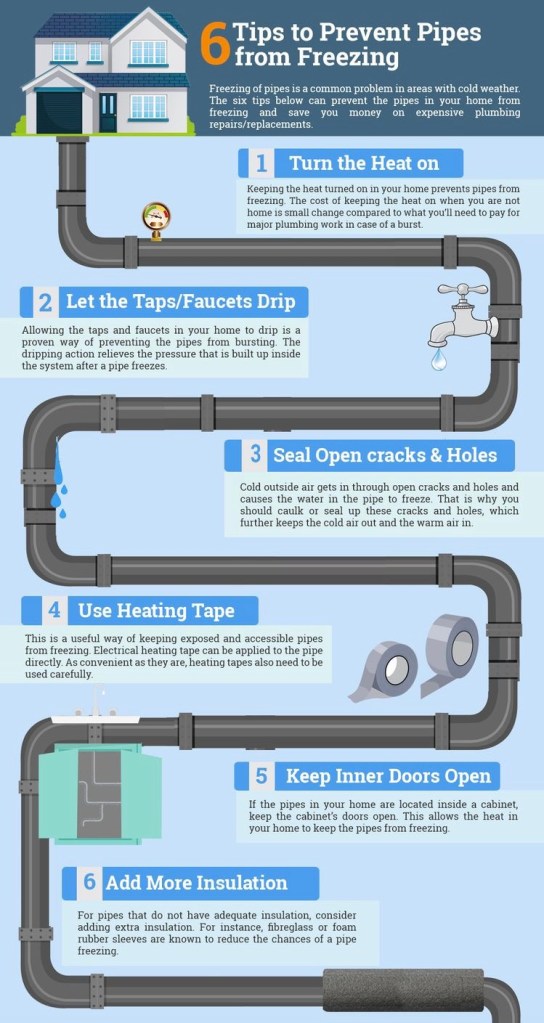
Tips on thawing frozen water pipes to parent water damage Thawing Frozen Pipes
What to do if a pipe bursts
https://www.lex18.com/news/unprecedented-number-of-water-pipes-break-in-lexington?_amp=true
If a pipe bursts in your home, you’ll need to act fast to mitigate additional damage. Shut off your water as quickly as possible. This will help minimize the amount of water that seeps out inside your walls. You may also want to shut off power in the affected area of your home. After you’ve taken these precautionary steps, it’s time to call a plumber and start mopping up any mess that’s been caused. Try to remove as much of the water and lingering moisture as you can to avoid mold and mildew buildup. Depending on the severity of your case, you may also need to bring in other professionals to address damage to your walls, carpet, flooring or ceiling.
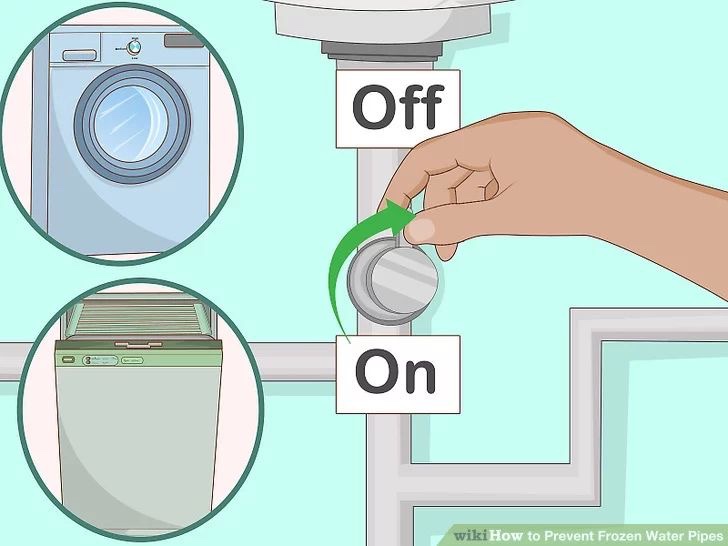
Shit water off to prevent water damage in case a pipe bursts How to thaw out pipes
How can you tell if your pipes are frozen? If you turn on the bathroom or kitchen faucet and see only a few drops or a trickle of water, this could indicate that water inside the pipes has frozen – preventing a free flow. But don’t panic. You may be more equipped to deal with the situation than you think. Here’s a quick lesson on how to thaw a frozen pipe.
Step 1. Turn on the faucet
Keep it running. Allowing the faucet to drip even slightly can help prevent a pipe from bursting. It’s simple – when freezing takes place, extreme pressure builds between the faucet and the ice blockage. An open faucet relieves this pressure buildup, in turn preventing a burst from occurring.
Step 2. Apply heat to the frozen area, thermal energy promotes drying.
Slowly apply heat using a hair dryer. There are several ways to do this. You can wrap the pipes in thermostatically controlled heat tape, or you can use an external heat source such as a hair dryer or space heater. Do not use a propane torch as this can damage the pipe and present a fire risk.
If you decide to use a hair dryer, begin directing air close to the faucet end of the pipe and gradually move toward the coldest section. Be careful not to overheat the hair dryer or blow a fuse. Remember, the faucet should be left on while heat is being applied.
Step 3. Continue to apply heat
Don’t stop heating until full water pressure is restored. Even then, it’s a good idea to leave the faucet open for a few minutes after the pipe is thawed. This will give the ice time to completely clear from the line.
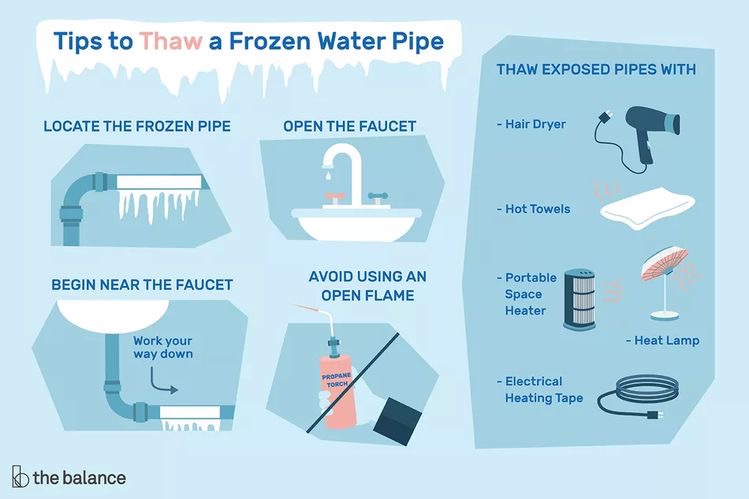
Ways to thaw frozen pipes Step 4. Check all faucets and prevent pipes from freezing in the future
Check each faucet in your home for any other frozen pipes. One frozen pipe may mean that others have been affected as well.
If the problem persists, contact a plumber. You can prevent pipes from freezing again by taking a few simple steps:
Before traveling, keep the temperature in your home above freezing and turn off all the water to your house.
Be sure to keep all water pipes, especially those close to outside walls, insulated with foam rubber or heating cable.
Keep cabinet doors open to allow air to circulate.
Let your faucets drip cold water – it is harder for a pipe to freeze even if there is a trickle of water flowing through. In order to not waste water, you can collect the drops and reuse it, possibly for cleaning or watering plants.
How long does it take for pipes to unfreeze?
Using any of the handful of methods on how to thaw frozen pipes will typically take about 30 minutes. This can vary depending on the weather, how long the pipe has been frozen and where the pipe is located. Any of these factors can cause the thawing process to take longer.2
And remember, a frozen pipe isn’t the only issue that comes with cold weather. Find out other ways to protect your home during the winter.
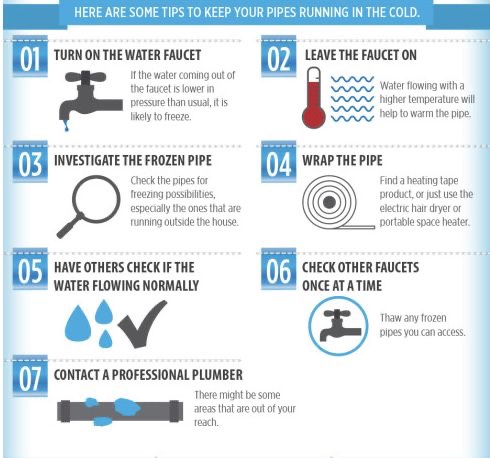
Ways to prevent frozen pipes Quick tip on drying if you have a pipe burst, find out the GPP (grains per pound) inside your home and then outside, you can do this by purchasing a thermometer hydrometer. If the gpp is lower outside than inside, then you can dry your home with what is known in the water damage restoration industry as “an open drying system. Click to check out our mold damage prevention tips there is more tips on how to dry a house out after water damage without water damage restoration equipment.
-
Do You Have Water Damage From Melting Snow Lexington, Ky 40517
Excessive snow on the roof, condensation in the attic and ice buildup can cause roof & water damage and personal injury.
While stopping a water leak or repairing a washing machine hose down in the basement might be fairly straightforward, snow on the roof, ice dams and attic condensation are forms of water damage typical to cold climate homes and are a little more complicated and a little trickier to fix.
Why is excessive snow on your roof a concern? What are ice dams? What causes attic condensation? And if you’ve had these, what can you do?
Why should you worry about snow on the roof?
Heavy loads of ice and snow on your roof can create serious problems. These include:
- Injuries from snow and ice falling from sloped roofs.
- Roof collapse, especially on flat roofs.
- Carbon monoxide poisoning resulting from blocked chimneys and vents.
- Water damage from ice dams that form on the edges of roofs and in gutters.
What are ice dams?
When the temperature in your attic is above freezing, snow on the roof will likely melt. When the snowmelt runs down the roof and hits the colder eaves, it refreezes.
If this cycle repeats over several days, the freezing snowmelt builds up and forms an ice dam, behind which water pools into large puddles, or “ponds”. The ponding water can then back up under the roof covering and leak into the attic or along exterior walls.
The right weather conditions for ice dams are usually when outside air temperatures are in the low 20s (°F) for several days with several inches of snow on the roof.
What causes condensation in your attic?
Condensation of water vapor on cold surfaces in attics can cause wood to rot, which can lead to costly repairs.
Attic condensation typically occurs when warm, moist air migrates or is directed into the attic from living spaces below. Research indicates unusually high humidity in the home’s living spaces is strongly associated with attic condensation problems.
Winter water damage warning signs to watch for
Recognize the signs of stress when too much snow and ice has accumulated on your roof or when you have too much condensation in your attic. Here are a few things to watch for.
- Sagging ridgeline
- Drooping ceilings
- Water leaks on interior walls and ceilings
- Jammed doors
- Cracked interior walls near the center of your home
- Creaking sounds
Condensation, snow on roof and ice dam prevention tips
Building codes have some requirements that attempt to prevent the problems of ice dams and attic condensation. But codes don’t address all the issues, and many houses could have out of date building codes.
- Bathroom and kitchen exhaust fans, as well as dryer vents, should never be discharged into the attic space and always discharge outside. You may have an adequately ventilated attic, but this won’t matter if the bathroom exhaust fan dumps warm moist air directly into the attic space. This could result in condensed water vapor freezing onto cold attic materials, which will eventually thaw creating wet attic materials resulting in damage in the attic and inside the home.
- Minimize ceiling mounted fixtures below the attic that create the need for holes in the drywall or plaster ceiling. Properly seal ceiling penetrations to make them airtight taking care to follow manufacturer clearance requirements for flues, chimneys and recessed light fixtures.
- Research shows keeping the attic air temperature below freezing when the outside air temperature is in the low 20s can reduce the occurrence of ice dams. Proper attic ventilation is key to keeping the attic cool, while adequate and properly installed insulation is key to keeping your house warm. It is critical to keep soffit vents free from obstructions to allow the natural flow of cool outside air into the attic space to replace the warmer attic air that rises and flows outside the ridge and/or roof vents. This flow of air will keep the attic cool and free of moisture build-up.
Removing ice and snow from your roof is a dangerous job. Avoid injury by hiring a professional to remove snow and ice from the roof and fix the problem before it leads to property damage and expensive repairs. Here are some tips to keep in mind.
- Add insulation to your attic to help prevent your home’s warm air from escaping into unheated attic spaces.
- If replacing your home’s roof, have a self-sealing membrane installed under the shingles to help prevent water damage from ice dams.
- On metal roofs, install snow guards above entrances.
What not to do
While it might be tempting to try a quick fix to break up that ice dam, don’t get too eager; not only is it dangerous on your roof, but you can also cause a lot of damage, especially in the colder months. Here are some things to consider.
- Do not routinely remove snow from the roof or attempt to “chip away” the ice of an ice dam. It will likely lead to shingle damage.
- Do not install large mechanical equipment or water heaters in attics, especially in cold climates. Not only do they present an unwelcome fire hazard, but they’ll also increase the temperature in your attic.
- Do not routinely use salt or calcium chloride to melt snow on a roof. These chemicals are very corrosive and can shorten the life of metal gutters, downspouts and flashings. Runoff that contains high concentrations of these chemicals can damage nearby grass and plants.
What to do
- Follow up with your new home or home-improvement contractor to be sure that insulation in the attic space is adequate for your location.
- Verify soffit and roof or ridge venting exists for all roof planes and that soffit vents are neither blocked by attic insulation nor covered by newly installed maintenance free finishes outside the home.
- Verify all penetrations, access panels and electrical fixtures are properly sealed and insulated to prevent heat and moisture from entering the attic space, while maintaining manufacturer’s required clearances.
- Verify all exhaust fans and dryer vents are discharged to the outside.
- Keep gutters clean of leaves and other debris. This will not necessarily prevent ice dams, but clean gutters can help drain away ice melt as it makes its way to the gutters during a thaw.
- Follow up a short-term ice dam remedy with determining and fixing the actual cause to your ice dam problem. Consult a trusted and competent professional.insulation to your attic https://g.co/kgs/5v6dYVKeep gutters clean of leavesKeep gutters clean of leavesmetal roofsmetal roofs
Express Damage Restoration would love your feedback. Post a review to our profile.Water damage restoration company, Lexington, Ky 40517
Winter water damage from ice dams, attic condensation & more
-
Water Damage From Ice Dams, What Is An Ice Dam?
Water damage restoration company, Lexington, Ky 40517
Winter water damage from ice dams, attic condensation & more
Excessive snow on the roof, condensation in the attic and ice buildup can cause roof & water damage and personal injury.
While stopping a water leak or repairing a washing machine hose down in the basement might be fairly straightforward, snow on the roof, ice dams and attic condensation are forms of water damage typical to cold climate homes and are a little more complicated and a little trickier to fix.
Why is excessive snow on your roof a concern? What are ice dams? What causes attic condensation? And if you’ve had these, what can you do?
Why should you worry about snow on the roof?
Heavy loads of ice and snow on your roof can create serious problems. These include:
- Injuries from snow and ice falling from sloped roofs.
- Roof collapse, especially on flat roofs.
- Carbon monoxide poisoning resulting from blocked chimneys and vents.
- Water damage from ice dams that form on the edges of roofs and in gutters.
What are ice dams?
When the temperature in your attic is above freezing, snow on the roof will likely melt. When the snowmelt runs down the roof and hits the colder eaves, it refreezes.
If this cycle repeats over several days, the freezing snowmelt builds up and forms an ice dam, behind which water pools into large puddles, or “ponds”. The ponding water can then back up under the roof covering and leak into the attic or along exterior walls.
The right weather conditions for ice dams are usually when outside air temperatures are in the low 20s (°F) for several days with several inches of snow on the roof.
What causes condensation in your attic?
Condensation of water vapor on cold surfaces in attics can cause wood to rot, which can lead to costly repairs.
Attic condensation typically occurs when warm, moist air migrates or is directed into the attic from living spaces below. Research indicates unusually high humidity in the home’s living spaces is strongly associated with attic condensation problems.
Winter water damage warning signs to watch for
Recognize the signs of stress when too much snow and ice has accumulated on your roof or when you have too much condensation in your attic. Here are a few things to watch for.
- Sagging ridgeline
- Drooping ceilings
- Water leaks on interior walls and ceilings
- Jammed doors
- Cracked interior walls near the center of your home
- Creaking sounds
Condensation, snow on roof and ice dam prevention tips
Building codes have some requirements that attempt to prevent the problems of ice dams and attic condensation. But codes don’t address all the issues, and many houses could have out of date building codes.
- Bathroom and kitchen exhaust fans, as well as dryer vents, should never be discharged into the attic space and always discharge outside. You may have an adequately ventilated attic, but this won’t matter if the bathroom exhaust fan dumps warm moist air directly into the attic space. This could result in condensed water vapor freezing onto cold attic materials, which will eventually thaw creating wet attic materials resulting in damage in the attic and inside the home.
- Minimize ceiling mounted fixtures below the attic that create the need for holes in the drywall or plaster ceiling. Properly seal ceiling penetrations to make them airtight taking care to follow manufacturer clearance requirements for flues, chimneys and recessed light fixtures.
- Research shows keeping the attic air temperature below freezing when the outside air temperature is in the low 20s can reduce the occurrence of ice dams. Proper attic ventilation is key to keeping the attic cool, while adequate and properly installed insulation is key to keeping your house warm. It is critical to keep soffit vents free from obstructions to allow the natural flow of cool outside air into the attic space to replace the warmer attic air that rises and flows outside the ridge and/or roof vents. This flow of air will keep the attic cool and free of moisture build-up.
Removing ice and snow from your roof is a dangerous job. Avoid injury by hiring a professional to remove snow and ice from the roof and fix the problem before it leads to property damage and expensive repairs. Here are some tips to keep in mind.
- Add insulation to your attic to help prevent your home’s warm air from escaping into unheated attic spaces.
- If replacing your home’s roof, have a self-sealing membrane installed under the shingles to help prevent water damage from ice dams.
- On metal roofs, install snow guards above entrances.
What not to do
While it might be tempting to try a quick fix to break up that ice dam, don’t get too eager; not only is it dangerous on your roof, but you can also cause a lot of damage, especially in the colder months. Here are some things to consider.
- Do not routinely remove snow from the roof or attempt to “chip away” the ice of an ice dam. It will likely lead to shingle damage.
- Do not install large mechanical equipment or water heaters in attics, especially in cold climates. Not only do they present an unwelcome fire hazard, but they’ll also increase the temperature in your attic.
- Do not routinely use salt or calcium chloride to melt snow on a roof. These chemicals are very corrosive and can shorten the life of metal gutters, downspouts and flashings. Runoff that contains high concentrations of these chemicals can damage nearby grass and plants.
What to do
- Follow up with your new home or home-improvement contractor to be sure that insulation in the attic space is adequate for your location.
- Verify soffit and roof or ridge venting exists for all roof planes and that soffit vents are neither blocked by attic insulation nor covered by newly installed maintenance free finishes outside the home.
- Verify all penetrations, access panels and electrical fixtures are properly sealed and insulated to prevent heat and moisture from entering the attic space, while maintaining manufacturer’s required clearances.
- Verify all exhaust fans and dryer vents are discharged to the outside.
- Keep gutters clean of leaves and other debris. This will not necessarily prevent ice dams, but clean gutters can help drain away ice melt as it makes its way to the gutters during a thaw.
- Follow up a short-term ice dam remedy with determining and fixing the actual cause to your ice dam problem. Consult a trusted and competent professional.insulation to your attic https://g.co/kgs/5v6dYVKeep gutters clean of leavesKeep gutters clean of leavesmetal roofsmetal roofs
Express Damage Restoration would love your feedback. Post a review to our profile.
-
Water Removal Service In Winchester,KY Call ☎️ (859)302-2702
Emergency 💦 Removal ☎️ (859)302-2702 Serving Richmond,Ky Lexington,KY Winchester,KY
27,952 2 17.6 sq mi (45.6 km2) 1797 Henderson Heritage Creek[a 1] 1,076 5 0.4 sq mi (1.0 km2) Jefferson Hickman 2,395 4 3.6 sq mi (9.3 km2) Fulton Hickory Hill 114 6 0.1 sq mi (0.3 km2) Jefferson Highland Heights 6,923 4 2.6 sq mi (6.7 km2) 1867 Campbell Hills and Dales 142 6 0.1 sq mi (0.3 km2) Jefferson Hillview 8,172 4 3.3 sq mi (8.5 km2) 1974 Bullitt Hindman 777 5 3.1 sq mi (8.0 km2) 1884 Knott Hodgenville 3,206 4 2.1 sq mi (5.4 km2) 1818 Larue Hollow Creek 783 5 0.2 sq mi (0.5 km2) Jefferson Hollyvilla 537 6 0.3 sq mi (0.8 km2) Jefferson Hopkinsville 31,577 2 30.8 sq mi (79.8 km2) 1799 Christian Horse Cave 2,311 4 2.7 sq mi (7.0 km2) 1864 Hart Houston Acres 507 6 0.1 sq mi (0.3 km2) Jefferson Hunters Hollow 386 6 0.1 sq mi (0.3 km2) Bullitt Hurstbourne 4,216 4 1.8 sq mi (4.7 km2) 1982 Jefferson Hurstbourne Acres 1,811 5 0.3 sq mi (0.8 km2) Jefferson Hustonville 405 5 1.0 sq mi (2.6 km2) Lincoln Hyden 365 6 1.3 sq mi (3.4 km2) 1878 Leslie Independence 24,757 3 17.7 sq mi (45.8 km2) 1842 Kenton Indian Hills 2,868 4 2.0 sq mi (5.2 km2) 1999 Jefferson Inez 717 6 1.7 sq mi (4.4 km2) 1874 Martin Irvine 2,715 4 1.5 sq mi (3.9 km2) 1812 Estill Irvington 1,181 5 0.9 sq mi (2.3 km2) Breckinridge Island 458 6 0.3 sq mi (0.8 km2) McLean Jackson 2,244 4 2.7 sq mi (7.0 km2) 1839 Breathitt Jamestown 1,794 5 3.0 sq mi (7.8 km2) 1827 Russell Jeffersontown 26,595 2 10.0 sq mi (25.9 km2) 1797 Jefferson Jeffersonville 1,506 5 2.5 sq mi (6.5 km2) Montgomery Jenkins 2,203 4 7.7 sq mi (19.9 km2) Letcher Junction City 2,241 4 1.8 sq mi (4.7 km2) Boyle Kenton Vale 110 6 0.1 sq mi (0.3 km2) Kenton Kevil 376 6 0.4 sq mi (1.0 km2) Ballard Kingsley 381 6 0.1 sq mi (0.3 km2) Jefferson Kuttawa 649 5 2.7 sq mi (7.0 km2) Lyon La Center 1,009 5 0.6 sq mi (1.6 km2) Ballard La Grange 8,082 4 7.1 sq mi (18.4 km2) 1827 Oldham LaFayette 165 6 0.2 sq mi (0.5 km2) Christian Lakeside Park 2,668 5 0.8 sq mi (2.1 km2) 1930 Kenton Lakeview Heights 185 6 0.1 sq mi (0.3 km2) Rowan Lancaster 3,442 4 1.9 sq mi (4.9 km2) 1797 Garrard Langdon Place 936 6 0.2 sq mi (0.5 km2) Jefferson Lawrenceburg 10,505 4 5.9 sq mi (15.3 km2) 1820 Anderson Lebanon 6,331 4 5.3 sq mi (13.7 km2) 1814 Marion Lebanon Junction 1,813 5 5.7 sq mi (14.8 km2) Bullitt Leitchfield 6,699 4 10.9 sq mi (28.2 km2) 1810 Grayson Lewisburg 810 5 1.2 sq mi (3.1 km2) Logan Lewisport 1,670 5 1.0 sq mi (2.6 km2) Hancock Lexington 295,803 2 285.6 sq mi (739.7 km2) 1790 Fayette Liberty 2,168 5 1.9 sq mi (4.9 km2) 1808 Casey Lincolnshire 148 6 0.1 sq mi (0.3 km2) Jefferson Livermore 1,365 5 1.0 sq mi (2.6 km2) McLean Livingston 226 6 0.3 sq mi (0.8 km2) Rockcastle London 7,993 4 10.3 sq mi (26.7 km2) 1825 Laurel Loretto 713 6 3.2 sq mi (8.3 km2) Marion Louisa 2,467 5 1.6 sq mi (4.1 km2) 1818 Lawrence Louisville[a 2] 597,337 1 342.2 sq mi (886.3 km2) 1778 Jefferson Loyall 1,461 5 1.4 sq mi (3.6 km2) Harlan Ludlow 4,407 4 1.2 sq mi (3.1 km2) 1864 Kenton Lynch 747 5 0.3 sq mi (0.8 km2) 1917 Harlan Lyndon 11,002 4 3.6 sq mi (9.3 km2) 1871 Jefferson Lynnview 914 5 0.2 sq mi (0.5 km2) Jefferson McHenry 388 6 0.7 sq mi (1.8 km2) Ohio McKee 800 5 2.3 sq mi (6.0 km2) Jackson Mackville 222 6 0.4 sq mi (1.0 km2) Washington Madisonville 19,591 4 18.7 sq mi (48.4 km2) 1807 Hopkins Manchester 1,255 4 1.5 sq mi (3.9 km2) 1807 Clay Manor Creek 140 6 0.1 sq mi (0.3 km2) Jefferson Marion 3,039 4 3.4 sq mi (8.8 km2) 1842 Crittenden Martin 634 4 0.7 sq mi (1.8 km2) Floyd Maryhill Estates 179 6 0.1 sq mi (0.3 km2) Jefferson Mayfield 10,024 3 10.4 sq mi (26.9 km2) 1823 Graves Maysville 9,011 3 21.4 sq mi (55.4 km2) 1787 Mason Meadow Vale 736 5 0.2 sq mi (0.5 km2) Jefferson Meadowbrook Farm 136 6 0.1 sq mi (0.3 km2) Jefferson Meadowview Estates 363 6 0.1 sq mi (0.3 km2) Jefferson Melbourne 401 6 0.8 sq mi (2.1 km2) Campbell Mentor 193 6 0.7 sq mi (1.8 km2) Campbell Middlesborough 10,334 3 7.6 sq mi (19.7 km2) 1890 Bell Middletown 7,218 4 5.1 sq mi (13.2 km2) 1797 Jefferson Midway 1,641 4 1.1 sq mi (2.8 km2) Woodford Millersburg 792 5 0.4 sq mi (1.0 km2) Bourbon Milton 593 6 1.3 sq mi (3.4 km2) Trimble Mockingbird Valley 167 6 0.2 sq mi (0.5 km2) Jefferson Monterey 138 6 0.3 sq mi (0.8 km2) Owen Monticello 6,188 4 5.9 sq mi (15.3 km2) 1800 Wayne Moorland 431 6 0.1 sq mi (0.3 km2) Jefferson Morehead 6,845 4 9.5 sq mi (24.6 km2) 1856 Rowan Morganfield 3,285 4 3.0 sq mi (7.8 km2) 1870 Union Morgantown 2,394 5 2.4 sq mi (6.2 km2) 1811 Butler Mortons Gap 863 5 1.2 sq mi (3.1 km2) Hopkins Mount Olivet 299 5 0.4 sq mi (1.0 km2) 1851 Robertson Mount Sterling 6,895 4 4.4 sq mi (11.4 km2) 1792 Montgomery Mount Vernon 2,477 5 1.7 sq mi (4.4 km2) 1790 Rockcastle Mount Washington 9,117 4 6.1 sq mi (15.8 km2) 1822 Bullitt Muldraugh 947 5 0.6 sq mi (1.6 km2) Meade Munfordville 1,615 5 2.3 sq mi (6.0 km2) 1816 Hart Murray 17,741 3 11.3 sq mi (29.3 km2) 1844 Calloway Murray Hill 582 6 0.1 sq mi (0.3 km2) Jefferson Nebo 236 6 0.3 sq mi (0.8 km2) Hopkins New Castle 912 5 0.4 sq mi (1.0 km2) 1798 Henry New Haven 855 6 0.6 sq mi (1.6 km2) Nelson Newport 15,273 2 3.0 sq mi (7.8 km2) 1794 Campbell Nicholasville 28,015 3 13.1 sq mi (33.9 km2) 1812 Jessamine Norbourne Estates 441 6 0.1 sq mi (0.3 km2) Jefferson North Middletown 643 5 0.3 sq mi (0.8 km2) Bourbon Northfield 1,020 5 0.5 sq mi (1.3 km2) Jefferson Nortonville 1,204 5 1.1 sq mi (2.8 km2) Hopkins Norwood 370 6 0.1 sq mi (0.3 km2) Jefferson Oak Grove 7,489 4 10.8 sq mi (28.0 km2) 1828 Christian Oakland 225 6 1.4 sq mi (3.6 km2) Warren Old Brownsboro Place 353 6 0.1 sq mi (0.3 km2) Jefferson Olive Hill 1,599 4 1.8 sq mi (4.7 km2) 1861 Carter Orchard Grass Hills 1,595 5 0.4 sq mi (1.0 km2) Oldham Owensboro 57,265 2 20.4 sq mi (52.8 km2) 1816 Daviess Owenton 1,327 5 1.1 sq mi (2.8 km2) 1822 Owen Owingsville 1,530 4 2.4 sq mi (6.2 km2) 1829 Bath Paducah 25,024 2 20.0 sq mi (51.8 km2) 1830 McCracken Paintsville 3,459 4 2.8 sq mi (7.3 km2) 1834 Johnson Paris 8,553 3 6.0 sq mi (15.5 km2) 1789 Bourbon Park City 537 5 1.5 sq mi (3.9 km2) Barren Park Hills 2,970 4 0.8 sq mi (2.1 km2) 1927 Kenton Parkway Village 650 6 0.1 sq mi (0.3 km2) Jefferson Pembroke 869 6 1.1 sq mi (2.8 km2) Christian Perryville 751 5 0.8 sq mi (2.1 km2) Boyle Pewee Valley 1,456 5 2.0 sq mi (5.2 km2) Oldham Pikeville 6,903 4 21.1 sq mi (54.6 km2) 1823 Pike Pineville 1,732 4 1.7 sq mi (4.4 km2) 1781 Bell Pioneer Village 2,030 4 0.7 sq mi (1.8 km2) Bullitt Pippa Passes 533 6 0.5 sq mi (1.3 km2) Knott Plantation 832 5 0.2 sq mi (0.5 km2) Jefferson Pleasureville 834 6 0.5 sq mi (1.3 km2) Henry
ShelbyPlum Springs 453 6 0.3 sq mi (0.8 km2) Warren Poplar Hills 362 6 0.1 sq mi (0.3 km2) Jefferson Powderly 745 5 1.6 sq mi (4.1 km2) Muhlenberg Prestonsburg 3,255 4 12.9 sq mi (33.4 km2) 1797 Floyd Prestonville 161 6 0.2 sq mi (0.5 km2) Carroll Princeton 6,329 4 9.0 sq mi (23.3 km2) 1817 Caldwell Prospect 4,698 3 3.9 sq mi (10.1 km2) 1974[3] Jefferson
OldhamProvidence 3,193 4 6.1 sq mi (15.8 km2) 1828 Webster Raceland 2,424 5 2.5 sq mi (6.5 km2) Greenup Radcliff 21,688 2 12.4 sq mi (32.1 km2) 1919 Hardin Ravenna 605 5 0.3 sq mi (0.8 km2) Estill Raywick 134 6 0.9 sq mi (2.3 km2) Marion Richlawn 405 6 0.1 sq mi (0.3 km2) Jefferson Richmond 31,364 2 23.1 sq mi (59.8 km2) 1798 Madison River Bluff 403 6 0.2 sq mi (0.5 km2) Oldham Riverwood 446 6 0.2 sq mi (0.5 km2) Jefferson Robards 515 6 3.0 sq mi (7.8 km2) Henderson Rochester 152 6 0.5 sq mi (1.3 km2) Butler Rockport 266 6 0.7 sq mi (1.8 km2) Ohio Rolling Fields 646 6 0.2 sq mi (0.5 km2) Jefferson Rolling Hills 959 5 0.2 sq mi (0.5 km2) Jefferson Russell 3,380 4 3.0 sq mi (7.8 km2) 1869 Greenup Russell Springs 2,441 5 4.5 sq mi (11.7 km2) Russell Russellville 6,947 4 10.8 sq mi (28.0 km2) 1798 Logan Ryland Heights 1,022 6 5.3 sq mi (13.7 km2) Kenton Sacramento 468 6 0.4 sq mi (1.0 km2) McLean Sadieville 303 5 1.1 sq mi (2.8 km2) Scott St. Charles 277 6 1.0 sq mi (2.6 km2) Hopkins St. Matthews 17,472 4 4.3 sq mi (11.1 km2) 1800 Jefferson St. Regis Park 1,454 4 0.4 sq mi (1.0 km2) Jefferson Salem 752 6 0.9 sq mi (2.3 km2) Livingston Salt Lick 303 6 0.8 sq mi (2.1 km2) Bath Salyersville 1,883 4 2.5 sq mi (6.5 km2) 1861 Magoffin Sanders 238 6 0.3 sq mi (0.8 km2) Carroll Sandy Hook 675 5 1.0 sq mi (2.6 km2) 1869 Elliott Sardis 103 6 1.0 sq mi (2.6 km2) Mason
RobertsonScience Hill 693 6 0.6 sq mi (1.6 km2) Pulaski Scottsville 4,226 4 5.7 sq mi (14.8 km2) 1816 Allen Sebree 1,603 5 2.9 sq mi (7.5 km2) Webster Seneca Gardens 696 6 0.2 sq mi (0.5 km2) Jefferson Sharpsburg 323 6 0.2 sq mi (0.5 km2) Bath Shelbyville 14,045 4 8.2 sq mi (21.2 km2) 1792 Shelby Shepherdsville 11,222 4 10.0 sq mi (25.9 km2) 1793 Bullitt Shively 15,264 3 4.6 sq mi (11.9 km2) 1831 Jefferson Silver Grove 1,102 5 1.7 sq mi (4.4 km2) Campbell Simpsonville 2,484 5 2.2 sq mi (5.7 km2) Shelby Slaughters 216 6 0.2 sq mi (0.5 km2) Webster Smithfield 106 6 0.1 sq mi (0.3 km2) Henry Smithland 301 6 0.5 sq mi (1.3 km2) 1805 Livingston Smiths Grove 714 5 0.8 sq mi (2.1 km2) Warren Somerset 11,196 3 11.3 sq mi (29.3 km2) 1801 Pulaski Sonora 513 6 1.1 sq mi (2.8 km2) Hardin South Carrollton 184 6 0.3 sq mi (0.8 km2) Muhlenberg South Park View 7 6 0.1 sq mi (0.3 km2) Jefferson South Shore 1,122 5 0.9 sq mi (2.3 km2) Greenup Southgate 3,803 4 1.4 sq mi (3.6 km2) 1907 Campbell Sparta 231 6 5.9 sq mi (15.3 km2) Gallatin
OwenSpring Mill 287 6 0.1 sq mi (0.3 km2) Jefferson Spring Valley 654 6 0.2 sq mi (0.5 km2) Jefferson Springfield 2,519 4 3.7 sq mi (9.6 km2) 1793 Washington Stamping Ground 643 6 0.4 sq mi (1.0 km2) Scott Stanford 3,487 4 3.1 sq mi (8.0 km2) 1786 Lincoln Stanton 2,733 4 2.1 sq mi (5.4 km2) 1854 Powell Strathmoor Manor 337 6 0.1 sq mi (0.3 km2) Jefferson Strathmoor Village 648 6 0.1 sq mi (0.3 km2) Jefferson Sturgis 1,898 4 1.6 sq mi (4.1 km2) Union Sycamore 160 6 0.1 sq mi (0.3 km2) Jefferson Taylor Mill 6,604 4 6.3 sq mi (16.3 km2) 1810 Kenton Taylorsville 763 5 0.3 sq mi (0.8 km2) 1790 Spencer Ten Broeck 103 6 0.2 sq mi (0.5 km2) Jefferson Thornhill 178 6 0.1 sq mi (0.3 km2) Jefferson Tompkinsville 2,402 5 3.6 sq mi (9.3 km2) 1809 Monroe Trenton 384 6 0.6 sq mi (1.6 km2) Todd Union 5,379 4 3.3 sq mi (8.5 km2) Boone Uniontown 1,002 5 0.9 sq mi (2.3 km2) Union Upton 683 6 1.4 sq mi (3.6 km2) Hardin
LarueVanceburg 1,518 4 1.3 sq mi (3.4 km2) 1827 Lewis Versailles 8,568 4 4.4 sq mi (11.4 km2) 1792 Woodford Vicco 334 6 0.8 sq mi (2.1 km2) Perry Villa Hills 7,489 4 4.4 sq mi (11.4 km2) 1921 Kenton Vine Grove 4,520 4 4.7 sq mi (12.2 km2) 1850 Hardin Wallins Creek 156 6 0.3 sq mi (0.8 km2) Harlan Walton 3,635 5 4.3 sq mi (11.1 km2) Boone
KentonWarfield 269 6 0.8 sq mi (2.1 km2) Martin Warsaw 1,615 4 0.7 sq mi (1.8 km2) 1798 Gallatin Water Valley 279 6 0.6 sq mi (1.6 km2) Graves Watterson Park 976 5 1.4 sq mi (3.6 km2) Jefferson Waverly 308 6 0.3 sq mi (0.8 km2) Union Wayland 426 6 2.6 sq mi (6.7 km2) Floyd Wellington 565 6 0.1 sq mi (0.3 km2) Jefferson West Buechel 1,230 5 0.6 sq mi (1.6 km2) Jefferson West Liberty 3,435 4 4.4 sq mi (11.4 km2) 1816 Morgan West Point 797 5 0.6 sq mi (1.6 km2) Hardin Westwood 634 6 0.1 sq mi (0.3 km2) Jefferson Wheatcroft 160 6 0.3 sq mi (0.8 km2) Webster Wheelwright 780 6 1.8 sq mi (4.7 km2) Floyd White Plains 884 5 3.2 sq mi (8.3 km2) Hopkins Whitesburg 2,139 4 3.2 sq mi (8.3 km2) 1842 Letcher Whitesville 552 6 0.4 sq mi (1.0 km2) Daviess Whitley City 1,170 CDP 2.3 sq mi (6.0 km2) 1902 McCreary Wickliffe 688 5 1.1 sq mi (2.8 km2) 1880 Ballard Wilder 3,035 5 3.8 sq mi (9.8 km2) Campbell Wildwood 261 6 0.1 sq mi (0.3 km2) Jefferson Williamsburg 5,245 4 4.9 sq mi (12.7 km2) 1819 Whitley Williamstown 3,925 5 17.0 sq mi (44.0 km2) 1820 Grant
PendletonWillisburg 282 6 0.7 sq mi (1.8 km2) Washington Wilmore 6,134 4 0.9 sq mi (2.3 km2) Jessamine Winchester 18,368 3 7.9 sq mi (20.5 km2) 1792 Clark Windy Hills 2,385 5 0.9 sq mi (2.3 km2) Jefferson Wingo 632 6 1.0 sq mi (2.6 km2) Graves Woodburn 355 6 0.4 sq mi (1.0 km2) Warren Woodbury 90 6 0.1 sq mi (0.3 km2) Butler Woodland Hills 696 6 0.2 sq mi (0.5 km2) Jefferson Woodlawn 229 6 0.1 sq mi (0.3 km2) Campbell Woodlawn Park 942 5 0.3 sq mi (0.8 km2) Jefferson Worthington 1,609 5 1.2 sq mi (3.1 km2) Greenup Worthington Hills 1,446 6 0.3 sq mi (0.8 km2) Jefferson Worthville 185 6 0.3 sq mi (0.8 km2) Carroll Wurtland
-
Choosing A Water damage Restoration Company
What
to consider when choosing a fire and damage restoration companyCertified experts
It is imperative to make certain that the
company in question has all the required state and local certifications to
complete the restoration job. These certifications should also be up-to-date.- Certification: Look for credentials from the
Institute of Inspection, Cleaning and Restoration Certification, also
known as the IICRC, for well-trained fire and water damage experts. - Sub-certifications: The IICRC has additional
specializations such as mold remediation or structural and commercial
Drying. Ask the company for details about their sub-certifications. - Restoration vs. reconstruction: Note that
the IICRC refers to restoration, not reconstruction. If the damage is to
severe that contractors are required to partially or completely
rebuild/reconstruct properties, make sure that they have all the proper
local licenses and certifications necessary. -
Experience
Every disaster is unique and requires the
utmost care. If a company begins operating from the wrong starting assumptions,
it can prolong or completely derail the restoration project unnecessarily.- Relevant experience: Make sure that the
company providing restoration has dealt with many previous situations that
are similar to the current task at hand. For example, standing water from
a flood could become contaminated with chemicals or substances that make
it a biohazard. Make sure the company knows what they are dealing with
before they come out to avoid added confusion that slows down the job. - Comprehensive evaluations: Don’t hold back
any information. Even details that don’t seem to be significant initially
can greatly impact the company’s professional evaluation of the
restoration requirements or the extent of structural damage.
Asset protection
Different kinds of materials – such as
furniture, computers, floors, etc. – require different treatments under very
specific timetables.- High-priority assets: Decide which assets
have the highest priority and then look for the company that specializes
in that particular area. - Practicality: Replacing property or recreating
data may be less expensive than restoration. Don’t compromise your
practicality. - Pre-inspection reports: Some types of leases
require a pre-inspection report by qualified restoration personnel to
establish insurability levels.
Time to recovery
Hours, and sometimes minutes, can make all
the difference in what is recoverable. Make sure the company will be ready the
moment disaster strikes.- Rapid response: The first few hours after a
disaster can make all the difference in terms of what is recoverable. Look
for rapid response times. Also critical, is advice on what to do
immediately and what needs attention within the first 24 hours. - Schedules: Look for a company that can give
a full, detailed schedule of steps that they will need to perform before
an estimated completion date. - Variable costs: Be prepared for costs to
vary greatly based on factors that aren’t obvious at first, such as
structural damage and the extent of smoke damage.
Storage facilities
Some restoration companies offer storage
facilities. Find out how much space the company has to house your undamaged
assets and what their storage rates are.- Storage conditions: Make sure that storage
facilities are nearby and adequate in terms of factors like temperature
control and security. - Packing services: Ask if they provide
packing services, which means that they can thoroughly clean property
before packing it up and putting it into the company’s storage facility. - Record keeping: Make sure to take photographic
records of the condition of your property before it goes into storage.
Referrals
Ask for names of commercial or
governmental agencies that the company has worked for and look for referrals.- Referral limitations: Don’t discount a
company just because its referrals aren’t perfect. Some items simply
aren’t restorable, and that fact creates disappointment. - Reputation vs. proficiency: Balance the
value of the company’s reputation with the company’s demonstrated
proficiency at deploying new technology. - Additional advice: Ask your insurance
carrier or lease holder if they have any specific recommendations or
requirements for disaster-recovery providers.
What are different types of restoration?
Water damage
The most common type of restorationservices deals with water damage from weather events, from plumbing ruptures or
from actions firefighters had to take to put out a fire. If not handled
properly and quickly, standing water can lead to mold growth, corrode
electronics and the weaken the structural supports of a building. Dealing with
mold prevention, detection and remediation as a result of standing water is the
next most common suite of services. If water damage has resulted from damaged
plumbing, the company must have the resources to treat the property for
contaminated water and biohazard recovery.Fire damage services include recovery
after a natural or man-made disaster. Many people don’t realize it also
includes smoke damage, even if the fire was suppressed before it grew out of
control. Smoke can permeate and damage many different types of materials, even
stone. Often, smoke damage from a thermal or chemical fire can be so severe
that the roof, walls and floor are not restorable. Restoration experts must
have many years of experience to properly identify which items they can save
and which items to replace.Data recovery
When fire or water damages paper files or
electronic equipment, data recovery services attempt to recover as much lost
information as possible. Services for data recovery after a disaster have
become the fastest-growing area of restoration services. Specifically, these
services deals with techniques to retrieve irreplaceable data from damaged
devices, system failures, common accidents or cybercrime. This field is changing
rapidly as new technology develops that can recover data in ways that were
impossible even a few years ago.Who can benefit from fire and damage restoration services?
Homeowners
When there is a disaster at a private
home, apartment building or vehicle, fire and water restoration specialists
need to possess a greater level of sensitivity about personal losses. In many
cases, people who have lost their homes and property may need community support
in order to handle the costs of restoration. Homeowners may also need
additional help from the restoration provider in dealing with their insurance
companies. Due to the sentimental value of items in the home, victims of fire
or water damage many need help assessing whether it is more practical for their
property to be restored or replaced.Businesses
The companies that specialize in
restoration services for commercial properties understand the full cost of
downtime and lost revenue while the restoration takes place. The damage to the
company’s reputation and brand value can be permanent if the fire and waterrestoration is not handled rapidly and efficiently. They are fully aware of the
heightened legal responsibilities of business owners to protect employees,
customers, investors and all of their personal data. Industrial clients often
have very specific requirements in terms of handling their most valuable
assets, such as semiconductors and cooling towers.Government and non-profits
Organizations dedicated to public welfare
or positive social outcomes often have an increased exposure to natural and man-made
disasters. Government agencies and non-profits often have to operate under
stricter guidelines, with greater regulatory oversight and under tighter
pricing requirements for the contractors they choose.Victims of data loss
It doesn’t take a great deal of water to
destroy electronic equipment or paper files. Moisture in carpets has been
responsible for destroying paper files and spilled drinks have wiped out
millions of dollars worth of data on company computers. Rebuilding after a fire
or water disaster means getting the business back open as soon as possible, and
that requires rapid data recovery. Lost customer data due to water damage can
also expose the company to legal and regulatory liabilities. In the information
economy, a simple electrical accident involving water damage to private data
can wipe out the viability of a business faster than the physical damage from a
fire or flood.
- Certification: Look for credentials from the
-
Read This Before Choosing A Water Damage Restoration Company
What to consider when choosing a fire and damage restoration company
Certified experts
It is imperative to make certain that the company in question has all the required state and local certifications to complete the restoration job. These certifications should also be up-to-date.
- Certification: Look for credentials from the Institute of Inspection, Cleaning and Restoration Certification, also known as the IICRC, for well-trained fire and water damage experts.
- Sub-certifications: The IICRC has additional specializations such as mold remediation or structural and commercial Drying. Ask the company for details about their sub-certifications.
- Restoration vs. reconstruction: Note that the IICRC refers to restoration, not reconstruction. If the damage is to severe that contractors are required to partially or completely rebuild/reconstruct properties, make sure that they have all the proper local licenses and certifications necessary.
-
Experience
Every disaster is unique and requires the utmost care. If a company begins operating from the wrong starting assumptions, it can prolong or completely derail the restoration project unnecessarily.
- Relevant experience: Make sure that the company providing restoration has dealt with many previous situations that are similar to the current task at hand. For example, standing water from a flood could become contaminated with chemicals or substances that make it a biohazard. Make sure the company knows what they are dealing with before they come out to avoid added confusion that slows down the job.
- Comprehensive evaluations: Don’t hold back any information. Even details that don’t seem to be significant initially can greatly impact the company’s professional evaluation of the restoration requirements or the extent of structural damage.
Asset protection
Different kinds of materials – such as furniture, computers, floors, etc. – require different treatments under very specific timetables.
- High-priority assets: Decide which assets have the highest priority and then look for the company that specializes in that particular area.
- Practicality: Replacing property or recreating data may be less expensive than restoration. Don’t compromise your practicality.
- Pre-inspection reports: Some types of leases require a pre-inspection report by qualified restoration personnel to establish insurability levels.
Time to recovery
Hours, and sometimes minutes, can make all the difference in what is recoverable. Make sure the company will be ready the moment disaster strikes.
- Rapid response: The first few hours after a disaster can make all the difference in terms of what is recoverable. Look for rapid response times. Also critical, is advice on what to do immediately and what needs attention within the first 24 hours.
- Schedules: Look for a company that can give a full, detailed schedule of steps that they will need to perform before an estimated completion date.
- Variable costs: Be prepared for costs to vary greatly based on factors that aren’t obvious at first, such as structural damage and the extent of smoke damage.
Storage facilities
Some restoration companies offer storage facilities. Find out how much space the company has to house your undamaged assets and what their storage rates are.
- Storage conditions: Make sure that storage facilities are nearby and adequate in terms of factors like temperature control and security.
- Packing services: Ask if they provide packing services, which means that they can thoroughly clean property before packing it up and putting it into the company’s storage facility.
- Record keeping: Make sure to take photographic records of the condition of your property before it goes into storage.
Referrals
Ask for names of commercial or governmental agencies that the company has worked for and look for referrals.
- Referral limitations: Don’t discount a company just because its referrals aren’t perfect. Some items simply aren’t restorable, and that fact creates disappointment.
- Reputation vs. proficiency: Balance the value of the company’s reputation with the company’s demonstrated proficiency at deploying new technology.
- Additional advice: Ask your insurance carrier or lease holder if they have any specific recommendations or requirements for disaster-recovery providers.
What are different types of restoration?
Fire damage services include recovery after a natural or man-made disaster. Many people don’t realize it also includes smoke damage, even if the fire was suppressed before it grew out of control. Smoke can permeate and damage many different types of materials, even stone. Often, smoke damage from a thermal or chemical fire can be so severe that the roof, walls and floor are not restorable. Restoration experts must have many years of experience to properly identify which items they can save and which items to replace.
Data recovery
When fire or water damages paper files or electronic equipment, data recovery services attempt to recover as much lost information as possible. Services for data recovery after a disaster have become the fastest-growing area of restoration services. Specifically, these services deals with techniques to retrieve irreplaceable data from damaged devices, system failures, common accidents or cybercrime. This field is changing rapidly as new technology develops that can recover data in ways that were impossible even a few years ago.
Who can benefit from fire and damage restoration services?
Government and non-profits
Organizations dedicated to public welfare or positive social outcomes often have an increased exposure to natural and man-made disasters. Government agencies and non-profits often have to operate under stricter guidelines, with greater regulatory oversight and under tighter pricing requirements for the contractors they choose.
Victims of data loss
It doesn’t take a great deal of water to destroy electronic equipment or paper files. Moisture in carpets has been responsible for destroying paper files and spilled drinks have wiped out millions of dollars worth of data on company computers. Rebuilding after a fire or water disaster means getting the business back open as soon as possible, and that requires rapid data recovery. Lost customer data due to water damage can also expose the company to legal and regulatory liabilities. In the information economy, a simple electrical accident involving water damage to private data can wipe out the viability of a business faster than the physical damage from a fire or flood.


.jpg)


Dont Let Water Damage Destroy Your House
Call For An Inspection: (859)302-2702
We Servere:
Lexington, Kentucky
Richmond,Kentucky
Newby,Kentucky
Nicholasvillle,Kentucky
Georgetown, Kentucky
Winchester, Kentucky
Follow Me On
Subscribe To My Newsletter
Subscribe for new travel stories and exclusive content.
 Water Damage Mitigation Company In Winchester KY