-
cigarette smoke odor removal, fire damage restoration, lexington, kentucky, mold inspection company, mold removal service, smoke odor removal, Water Damage, water damage cleanup, water damage cleanup company, water damage mitigation, water damage mitigation company, water damage restoration, water removal service near me, water restoration company
7 Hidden Signs of Water Damage in Your Home or Business
Serving All Of Central Kentucky


We are an IICRC Water Damage Restoration Master Restorers

Book Now

We Are Also IICRC Certified Master Fire Damage Restorers Click To Book
24 HR Water Removal Services Click To Call
-
The Importance of Exterior and Interior Waterproofing

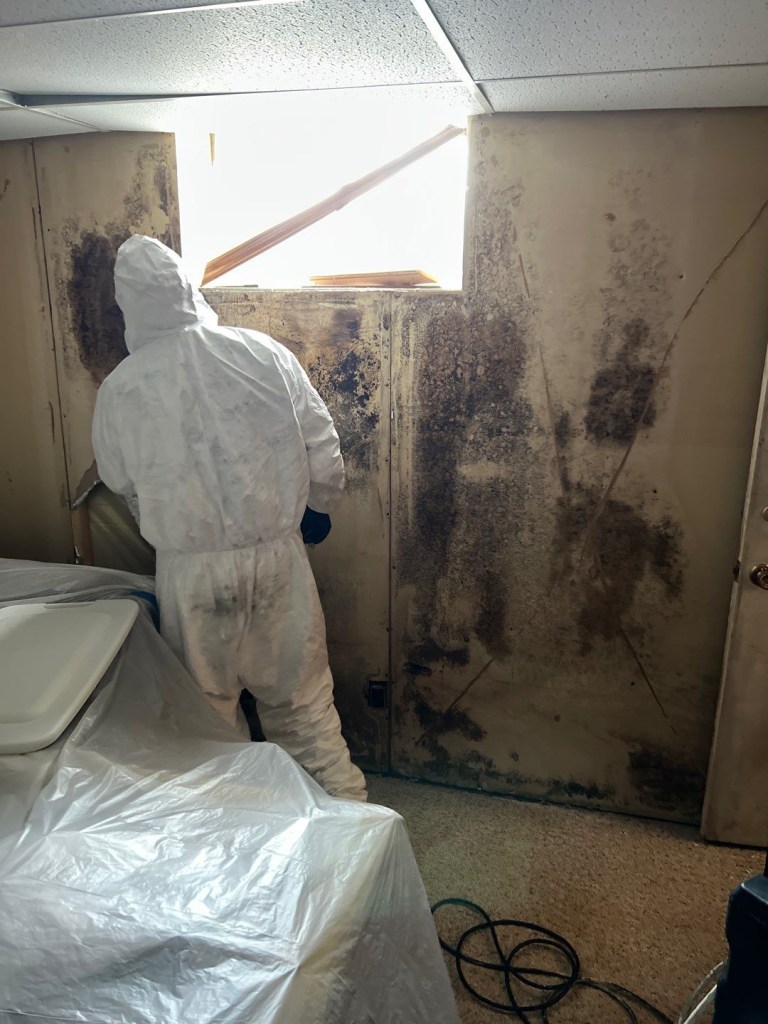
This basement was below grade, the waterproofing product used to seal the exterior when constructed, had degraded and delaminated over time. The Importance of Exterior and Interior Waterproofing
Waterproofing is an essential aspect of maintaining the structural integrity and longevity of any property. Whether it’s a residential home, a commercial building, or an industrial facility, ensuring that both the exterior and interior are well-protected from water damage can save you significant time, money, and stress in the long run. Here’s why you might need exterior or interior waterproofing and how it can benefit your property.
Understanding Exterior Waterproofing
Exterior waterproofing focuses on protecting the outer structure of a building from water infiltration. This type of waterproofing is crucial for several reasons:
- Preventing Structural Damage: Water seepage can weaken the foundation, leading to cracks and structural instability. Exterior waterproofing helps keep water away from the foundation, preserving its strength and durability.
- Mold and Mildew Prevention: Moisture can create an ideal environment for mold and mildew growth, which can cause health issues and damage building materials. Exterior waterproofing reduces the risk of mold and mildew by keeping water out.
- Enhancing Property Value: A well-maintained, waterproofed exterior can increase your property’s market value. Potential buyers are likely to pay more for a home or building that doesn’t have water damage issues.
- Energy Efficiency: Waterproofing can also improve your property’s energy efficiency. Proper insulation and waterproofing can help maintain indoor temperatures, reducing the load on heating and cooling systems.
The Role of Interior Waterproofing

Annual inspections are needed to maintain waterproofing efforts all of our waterproofing installations come with regular maintenance and inspections Interior waterproofing is equally important and serves as an additional line of defense against water intrusion. Here’s why you might need interior waterproofing:
- Basement Protection: Basements are particularly susceptible to water infiltration. Interior waterproofing helps keep basements dry, preventing damage to personal belongings and reducing the risk of mold growth.
- Mitigating Existing Water Problems: If your property already has water issues, interior waterproofing can help manage and reduce the impact. This approach includes installing sump pumps, interior drainage systems, and waterproof coatings.
- Health and Safety: A dry interior environment is crucial for maintaining good indoor air quality. Waterproofing helps prevent mold and mildew, which can cause respiratory problems and other health issues.
- Longevity of Building Materials: Water damage can cause significant wear and tear on building materials. Interior waterproofing protects walls, floors, and other structures from moisture, prolonging their lifespan.
Choosing the Right Waterproofing Solution
Determining whether you need exterior or interior waterproofing—or both—depends on your specific situation. Here are some factors to consider:
- Climate and Weather Conditions: Properties in areas with high rainfall or prone to flooding may benefit more from exterior waterproofing.
- Age and Condition of the Property: Older properties with existing water damage may require comprehensive interior waterproofing solutions.
- Budget and Resources: While exterior waterproofing is typically more expensive, it offers long-term benefits. Interior waterproofing can be a cost-effective solution for managing current issues.
Professional Waterproofing Services
IICRC Water-Mold-Smoke-Fire Damage Certified Professionals Call ☎️ 859-267-3482 At Property Damage Solutions, we specialize in both exterior and interior waterproofing services. Our team of experts can assess your property, identify potential water intrusion points, and recommend the best solutions to protect your investment.
Conclusion
Waterproofing is not just an optional upgrade; it’s a necessary step to protect your property from the damaging effects of water. Whether you need to safeguard the exterior, manage existing interior issues, or both, professional waterproofing services can help you maintain a safe, dry, and valuable property. Contact us today to learn more about our comprehensive waterproofing solutions and how we can help you achieve peace of mind and long-term property protection.
For more information, visit Property Damage Solutions or give us a call at 859-302-9666. Let us help you keep your property safe from water damage.
-
Understanding Whiskey Fungus: Causes, Effects, and Prevention

Whiskey Fungus Is A Black Mold Whiskey fungus, also known as Baudoinia compniacensis, is a type of black mold that commonly grows on buildings and structures near whiskey distilleries and other facilities where ethanol is produced. While whiskey fungus itself does not pose significant health risks to humans, it can cause aesthetic and structural damage to buildings and outdoor surfaces. In this article, we’ll explore the causes, effects, and prevention measures for whiskey fungus.
Causes of Whiskey Fungus:
Whiskey fungus thrives in environments with high levels of ethanol vapor, which are typically found near distilleries, breweries, and other industrial facilities where alcohol is produced. The fungus feeds on the ethanol vapors released during the fermentation and aging processes, as well as on other organic compounds present in the air.

Houses Near Distilleries Commonly Need Pressure Washed And Treated Effects of Whiskey Fungus:
- Aesthetic Damage: The most noticeable effect of whiskey fungus is the black staining it creates on outdoor surfaces such as buildings, fences, and trees. These unsightly stains can detract from the appearance of properties and structures, leading to concerns among property owners and communities.
- Structural Damage: In addition to aesthetic concerns, whiskey fungus can also cause structural damage to buildings and other surfaces over time. The fungus can penetrate and degrade certain types of building materials, including wood, concrete, and metal, potentially compromising their integrity and longevity.
- Environmental Impact: Whiskey fungus releases spores into the air, which can spread and settle on nearby vegetation, soil, and water bodies. While the impact of whiskey fungus on the environment is relatively minimal compared to other types of pollution, it can still contribute to ecological changes in affected areas.

We use a plant based anti microbial in our monthly treatments for clients as well as thorough inspections to the most vulnerable areas of the home. These monthly treatments are for any microbes as well as whiskey fungus. Prevention of Whiskey Fungus:
- Site Selection: When planning the location of a distillery or industrial facility, consider the surrounding environment and potential impacts on nearby properties. Choose sites with adequate distance from residential areas and sensitive ecosystems to minimize the risk of whiskey fungus growth.
- Emissions Control: Implement measures to control and reduce emissions of ethanol vapors and other organic compounds from production processes. This may include installing vapor recovery systems, improving ventilation, and optimizing fermentation and aging techniques to minimize emissions.
- Surface Treatments: Apply protective coatings or sealants to outdoor surfaces to create a barrier against whiskey fungus growth. These treatments can help prevent the fungus from establishing a foothold and make it easier to clean and remove any staining that does occur.
- Regular Maintenance: Implement a regular maintenance schedule to inspect and clean outdoor surfaces for signs of whiskey fungus growth. Promptly remove any black stains using appropriate cleaning methods and products to prevent further spread and damage.
- Community Engagement: Foster open communication and collaboration with local communities and stakeholders to address concerns related to whiskey fungus. Educate residents and property owners about the causes and effects of the fungus and involve them in discussions about prevention and mitigation strategies.
Conclusion:
Whiskey fungus may not pose a direct health risk to humans, but its presence can have significant aesthetic and structural impacts on buildings and outdoor surfaces near distilleries and industrial facilities. By understanding the causes of whiskey fungus and implementing proactive prevention measures, we can minimize its effects and preserve the integrity and beauty of our communities.
For professional assistance with whiskey fungus removal and prevention, contact Property Damage Solutions at (859) 302-9666 or email propertydamage123@gmail.com.
We Are IICRC Certified Mold Removal Specialists Call, Text, Email, we do emergency water extraction 24/7/365
-

Emergency Water Extraction from Basements and Crawlspaces in Richmond, Kentucky
Emergency Water Extraction from Basements and Crawlspaces in Richmond, Kentucky
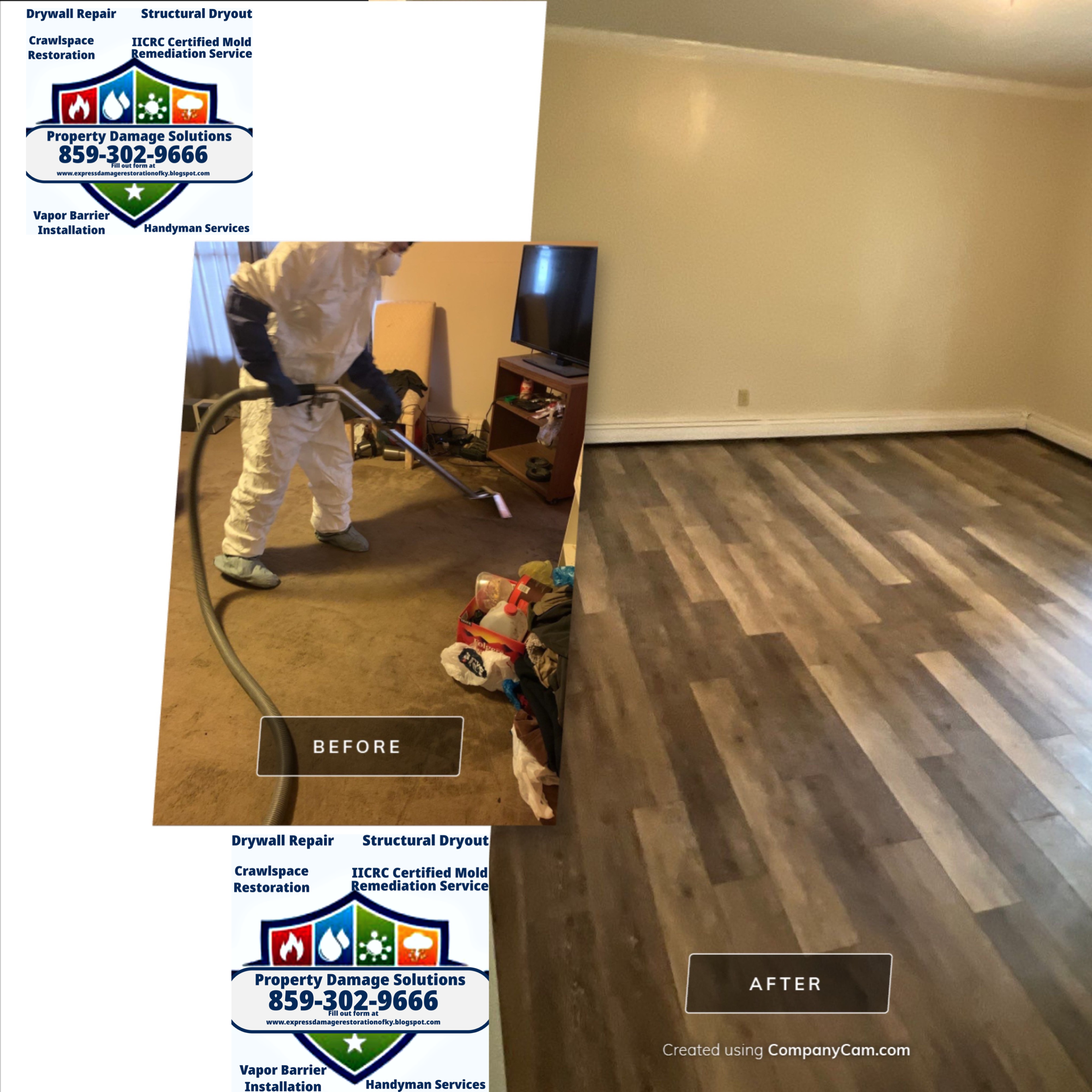
When disaster strikes, swift action is crucial to minimize damage and restore normalcy. At Property Damage Solutions, we specialize in emergency water extraction services for basements and crawlspaces in Richmond, Kentucky, and surrounding areas of central Kentucky. With our prompt response and expertise, we’ll help you mitigate water damage effectively, ensuring your property is restored to its pre-loss condition.
Expert Water Extraction Services
Our team of skilled professionals is equipped with state-of-the-art equipment and industry-leading techniques to tackle water emergencies of any scale. Whether it’s a burst pipe, flooding, or any other water-related catastrophe, we’re here to provide swift and efficient water extraction services.
Comprehensive Assessment and Planning
Upon arrival at your property, our certified technicians will conduct a thorough assessment of the water damage. We’ll determine the extent of the damage and formulate a tailored plan to address the situation effectively. Our goal is to minimize disruption to your life and property while ensuring thorough water extraction and drying.
Advanced Equipment and Techniques
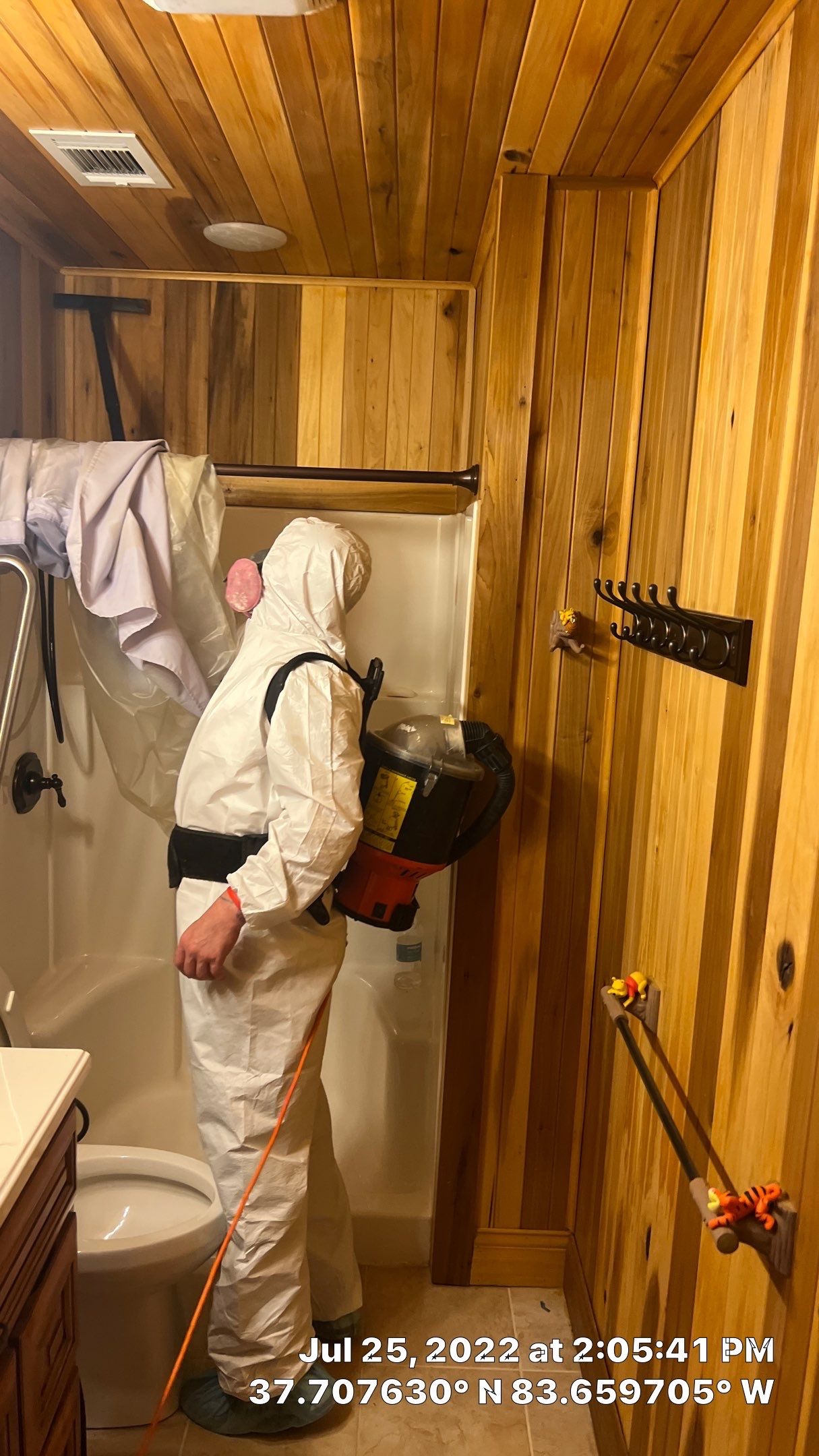
At Property Damage Solutions, we utilize advanced water extraction equipment, including powerful pumps, extractors, and dehumidifiers, to remove water quickly and efficiently. Our team is trained in the latest techniques for water removal and structural drying, ensuring that your property is dried thoroughly to prevent mold growth and structural damage.
24/7 Emergency Response
Water emergencies can happen at any time, day or night. That’s why we offer 24/7 emergency response services to our clients in Richmond, Kentucky, and the surrounding areas. You can count on us to be there when you need us the most, ready to provide immediate assistance and peace of mind.
Licensed, Bonded, and Insured
Property Damage Solutions is a licensed, bonded, and insured water damage restoration company. We adhere to the highest industry standards and regulations to ensure the safety and satisfaction of our clients. With us, you can rest assured that your property is in capable hands.
Contact Us Today
 Call ☎️ 859-302-9666
Don’t let water damage wreak havoc on your property. If you’re facing a water emergency in your basement or crawlspace, don’t hesitate to contact Property Damage Solutions at 859-302-9666. Our team is standing by to provide prompt, professional assistance and help you restore your property to its former glory.
-
How Does A.T.P testing work

The following article explains; How Does A.T.P testing work.
ATP (Adenosine Triphosphate) testing is a method used to determine the presence of biological contamination, such as bacteria, yeast, or mold, in a sample. The test works by measuring the amount of ATP (a molecule found in all living cells) in a sample using a luminometer.

A.T.P Testing With A Luminometer Typically, the sample is mixed with a reagent called luciferin, which reacts with ATP to produce light. The amount of light produced is proportional to the amount of ATP present in the sample. The light emission is then measured by the luminometer, and the result is reported in relative light units (RLU). High RLU values indicate high levels of ATP and therefore high levels of biological contamination.
ATP testing is widely used in a variety of industries, including food safety, environmental monitoring, and healthcare, as a quick and simple way to assess the level of hygiene and cleanliness in a given area.
-
lexington, kentucky, mold damage, mold inspection company, mold remediation, mold removal, richmond,Kentucky, Water Damage, water damage cleanup, water damage cleanup company, water damage mitigation, water damage mitigation company, water damage restoration, water removal service near me, water restoration company
How to thaw frozen pipes

For emergency water removal call ☎️ (859)302-2702
Old man winter is unbearable as it is, water damage from burst frozen pipes in the middle of it can be a nightmare. Should your pipes freeze, the following will give you tips on how to thaw frozen pipes.
Tips on thawing frozen water pipes to parent water damage Thawing Frozen Pipes
What to do if a pipe bursts
https://www.lex18.com/news/unprecedented-number-of-water-pipes-break-in-lexington?_amp=true
If a pipe bursts in your home, you’ll need to act fast to mitigate additional damage. Shut off your water as quickly as possible. This will help minimize the amount of water that seeps out inside your walls. You may also want to shut off power in the affected area of your home. After you’ve taken these precautionary steps, it’s time to call a plumber and start mopping up any mess that’s been caused. Try to remove as much of the water and lingering moisture as you can to avoid mold and mildew buildup. Depending on the severity of your case, you may also need to bring in other professionals to address damage to your walls, carpet, flooring or ceiling.
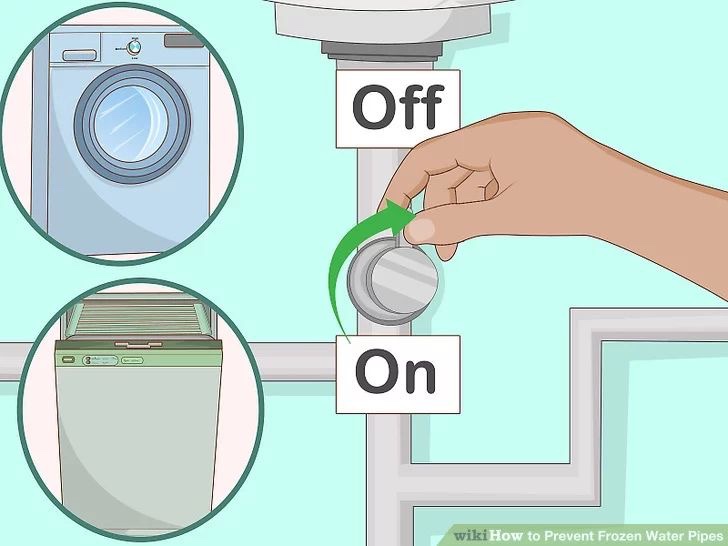
Shit water off to prevent water damage in case a pipe bursts How to thaw out pipes
How can you tell if your pipes are frozen? If you turn on the bathroom or kitchen faucet and see only a few drops or a trickle of water, this could indicate that water inside the pipes has frozen – preventing a free flow. But don’t panic. You may be more equipped to deal with the situation than you think. Here’s a quick lesson on how to thaw a frozen pipe.
Step 1. Turn on the faucet
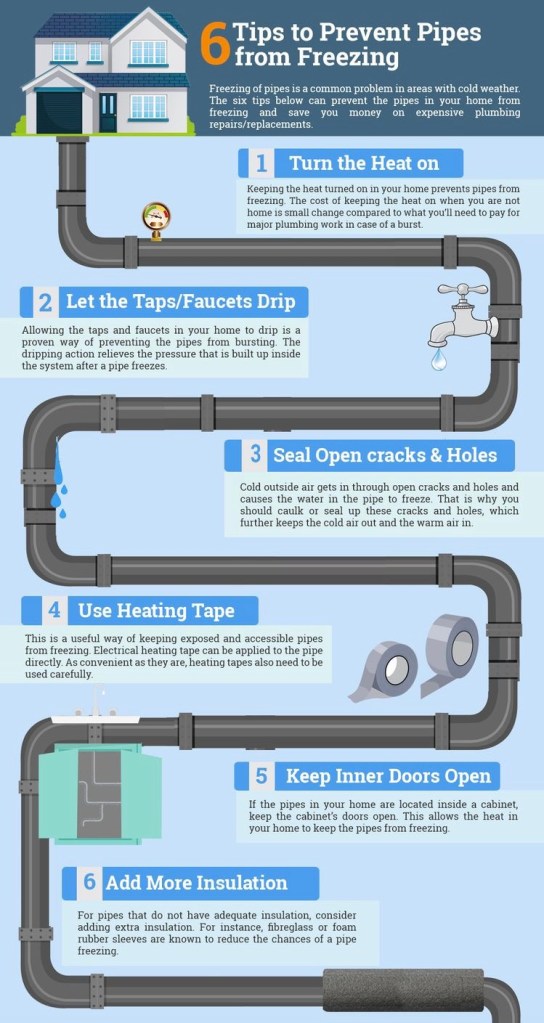
Keep it running. Allowing the faucet to drip even slightly can help prevent a pipe from bursting. It’s simple – when freezing takes place, extreme pressure builds between the faucet and the ice blockage. An open faucet relieves this pressure buildup, in turn preventing a burst from occurring.
Step 2. Apply heat to the frozen area, thermal energy promotes drying.
Slowly apply heat using a hair dryer. There are several ways to do this. You can wrap the pipes in thermostatically controlled heat tape, or you can use an external heat source such as a hair dryer or space heater. Do not use a propane torch as this can damage the pipe and present a fire risk.
If you decide to use a hair dryer, begin directing air close to the faucet end of the pipe and gradually move toward the coldest section. Be careful not to overheat the hair dryer or blow a fuse. Remember, the faucet should be left on while heat is being applied.
Step 3. Continue to apply heat
Don’t stop heating until full water pressure is restored. Even then, it’s a good idea to leave the faucet open for a few minutes after the pipe is thawed. This will give the ice time to completely clear from the line.
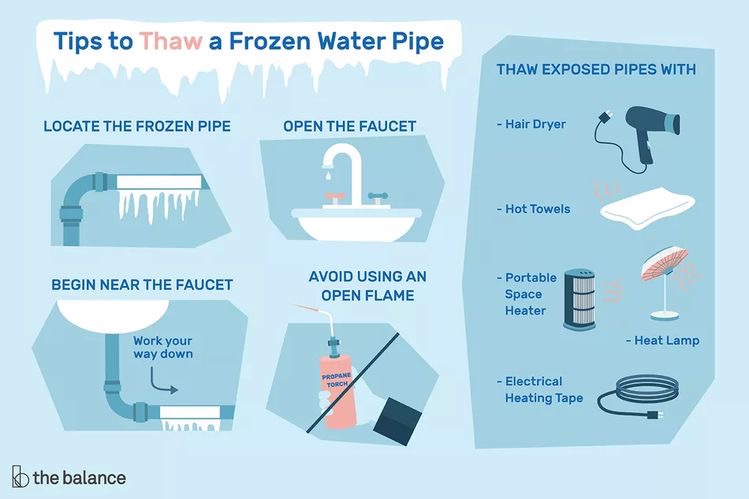
Ways to thaw frozen pipes Step 4. Check all faucets and prevent pipes from freezing in the future
Check each faucet in your home for any other frozen pipes. One frozen pipe may mean that others have been affected as well.
If the problem persists, contact a plumber. You can prevent pipes from freezing again by taking a few simple steps:
Before traveling, keep the temperature in your home above freezing and turn off all the water to your house.
Be sure to keep all water pipes, especially those close to outside walls, insulated with foam rubber or heating cable.
Keep cabinet doors open to allow air to circulate.
Let your faucets drip cold water – it is harder for a pipe to freeze even if there is a trickle of water flowing through. In order to not waste water, you can collect the drops and reuse it, possibly for cleaning or watering plants.
How long does it take for pipes to unfreeze?
Using any of the handful of methods on how to thaw frozen pipes will typically take about 30 minutes. This can vary depending on the weather, how long the pipe has been frozen and where the pipe is located. Any of these factors can cause the thawing process to take longer.2
And remember, a frozen pipe isn’t the only issue that comes with cold weather. Find out other ways to protect your home during the winter.
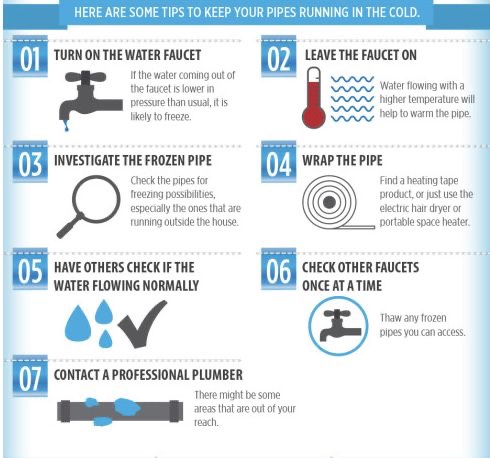
Ways to prevent frozen pipes Quick tip on drying if you have a pipe burst, find out the GPP (grains per pound) inside your home and then outside, you can do this by purchasing a thermometer hydrometer. If the gpp is lower outside than inside, then you can dry your home with what is known in the water damage restoration industry as “an open drying system. Click to check out our mold damage prevention tips there is more tips on how to dry a house out after water damage without water damage restoration equipment.
-
Flood Damage Cleanup What You Should Know
Before entering a building where flood damage may have occurred, read this article on flood damage cleanup what you should know. Make sure it’s safe: check for electrical hazards and structural damage, and use proper protective gear like boots, gloves, and respirators. Before you start any construction or repairs, check for common hazardous materials like lead paint and asbestos, which may require help from professional and State-licensed contractors
.
Lexington Kentucky’s Fastest Flood Damage Cleanup Company
Then, follow these tips:
- ACT QUICKLY
- The severity of damage escalates the longer water sits and building components and contents stay wet, so time is of the essence in the aftermath of a flood. In fact, mold will grow within 48-72 hours, so aim to start removing water and drying the environment within 48 hours. Have a list of professionals on hand to call, and understand your insurance policy, as some only cover mold damage up to a certain amount, while others don’t provide any reimbursement for mold.
- VENTILATE AFFECTED AREAS TO PREVENT MOLD GROWTH
- Mold loves moisture and organic materials such as paper or particleboard. In order to mitigate or slow damage, open windows if weather permits and place fans inside of them to keep air moving and maintain moderate temperatures. Work toward the fan as you clean to minimize cross-contamination.
- ASSESS DAMAGE TO ITEMS AND MATERIALS
- Assess the type of water absorbed by items, such as rainwater, water from broken pipes, contaminated river water, or bacteria-filled sewage. There are ways to salvage specialty items but the decision on whether to save or trash an item will vary depending on the dollar and sentimental value to the owner. It may not be worthwhile to salvage drywall, carpets, pads, mattresses, pillows, box springs, and particleboard.On the other hand, it might be worthwhile to restore costly Persian rugs, leather couches, and antiques or heirlooms. Wet clothing and many household fabrics may be salvageable through machine washing, and a 10-minute soak in detergent and hot water, to remove contamination and stains. The IICRC strongly recommends that in water damages where there are contaminants present (e.g., bacteria, sewage, mold) or where small children or immune-compromised individuals are present that an inspection is conducted by an appropriately trained restorer and remediator.
- EXPOSE POCKETS OF SATURATION
- Hidden and concealed pockets of saturation need to be opened for cleaning and drying. Layers between building materials hold water that must be discovered and removed or dried. On walls, find the water line and inspect at least a foot beyond it to make sure all damage, wet materials, and mold are discovered. Remove and discard the damaged drywall and wet wall insulation.Wet carpets can usually be dried by professionals with the right equipment, but carpet padding, which is like a big sponge, should be discarded. Wood base trim and hardwood can also be saved with the right equipment if they can be accessed and completely dried on both sides. Remember to investigate concealed cavities such as behind walls, in mechanical spaces, under cabinets and furniture, and in crawl spaces.
- CONDUCT A THOROUGH CLEANING
- Durable, non-porous, or semi-porous materials, such as studs and joists, hardwood flooring, and vinyl products, can be cleaned with common cleaning products or specialized products with detergents. During cleaning, take care to protect areas that are unaffected by the water or mold. After a thorough cleaning of salvageable materials, a disinfectant solution may need to be applied in case of harmful bacteria from sewage, river water debris, or even standing water that has gone bad.Professionals like water restoration and mold remediation contractors and indoor environmental professionals can help you decide what is best for your situation. Once you’ve cleaned the wet materials, conduct another round of cleaning. If you choose to vacuum, use a HEPA-filter vacuum to remove allergens, fine dust, and spores.
- CONFIRM DRYING BEFORE RECONSTRUCTION
- In order to prevent dry rot and structural damage, it’s important not to reconstruct or cover wood and other wet materials until the moisture content has been adequately reduced. A water restoration professional can confirm proper drying before reconstruction.
-
Smoke Damage Restoration
Kentuckys number 1 smoke damage restoration company! Call ☎️ (859)302-2702
Title: The Importance of Professional Smoke Damage Restoration
Article Description
The article description provided by the customer.
Description:Smoke damage is one of the most difficult types of damage to repair. It is important to have a professional assess the damage and determine the best course of action for restoration. Smoke damage can cause extensive damage to the structure of a home and its contents. It is important to have a professional who is trained in smoke damage restoration to repair the damage.
Keywords
These keywords must be included in the article.
Keywords:
Carpet cleaning, Smoke damage restoration, Smoke odor removal service, fire damage mitigation, fire damage restoration soot removal
Table of Contents
These headings and questions must be included in the article.
- What is smoke damage?
- How to clean smoke damage
- How to restore smoke damage
- Conclusion
- Intro
Facts & Data
These facts must be included in the article.
- Fact 1:According to Thumbtack.com, costs can average anywhere from $3,000 to $5,000 to recover and restore your home after a small fire.(Source: https://www.amfam.com/resources/articles/at-home/how-much-is-smoke-damage-cleanup)
- Fact 2:Pots, pans, flatware, etc., should be washed with soapy water, rinsed and then polished.(Source: https://www.redcross.org/get-help/how-to-prepare-for-emergencies/types-of-emergencies/fire/cleaning-up-after-fire.html)
Images of smoke damage restoration
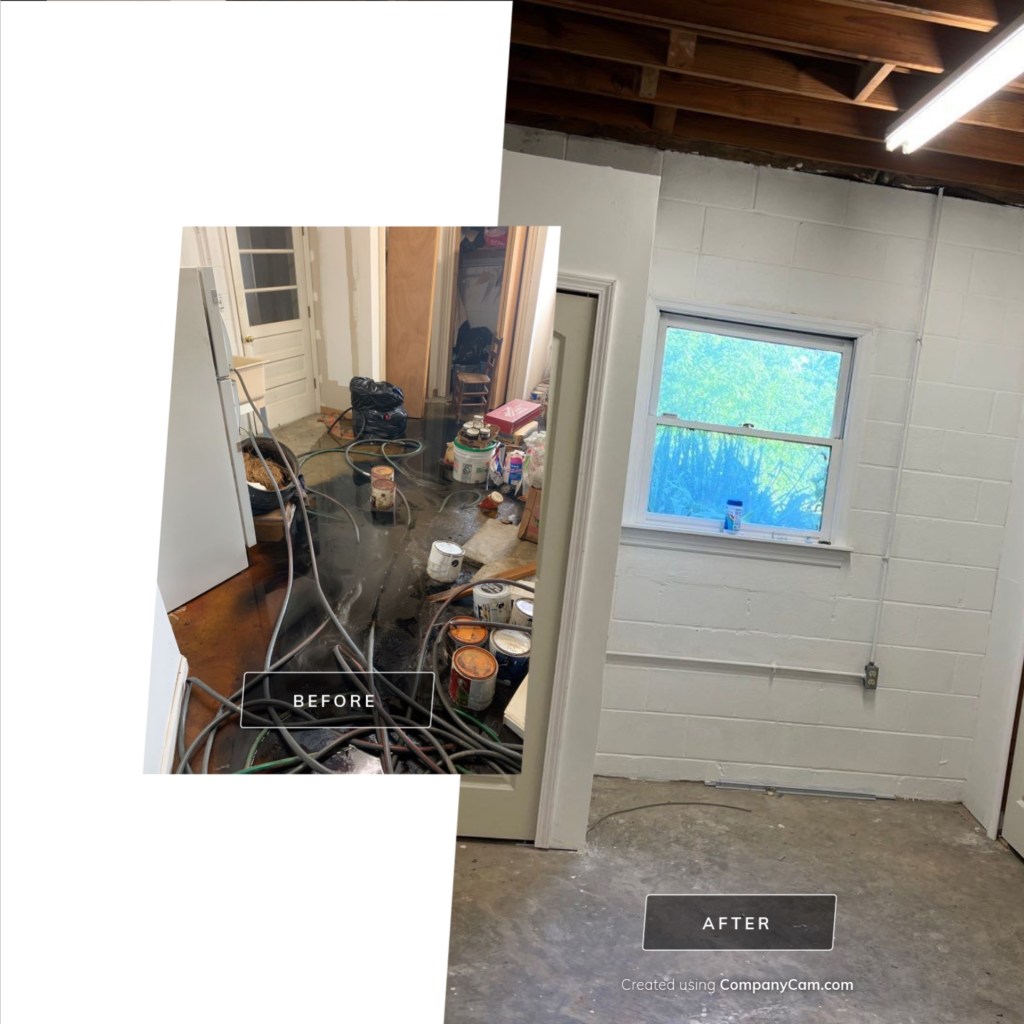
Water Proofing Basement
- What is smoke damage?
-
Ways to pay for water damage restoration
The water heater is notorious for suddenly leaking or completely bursting within its ten-year lifespan. A new water heater can put homeowners back $300 to $900, plus $250 for installation. A new roof is another example of an unanticipated home repair. Most homeowners put off inspecting the roof until it starts to leak. By the time the leak is noticed, significant structural damage is likely to have occurred, meaning pricier fixes. Depending on the size of the property, a new roof can cost anywhere from $5,000 to $12,000. Here are some ways to pay for water damage restoration

Flood damaged home The AC unit typically lasts decades. When it fails in the middle of a summer heat wave, homeowners will want to replace it immediately. A new air conditioning unit has the price tag of $5,210. In the same vein, a broken furnace in the dead of winter can be replaced at the cost of $3,865.
A HELOC allows homeowners to take out a loan to finance home repairs. The amount of equity in a home determines the HELOC limit. Over 20 percent equity can qualify homeowners for a HELOC. The term of the loan is usually 5 to 10 years, and the interest is only paid on the dollar amount used.
Homeowners can determine the total loan amount they’ll require from a loan by figuring the estimated costs of home repairs. A leaky toilet can be replaced for $411 to $595. A burst water pipe has a repair price tag of $800 to $1,200. Water damage repairs on average cost up to $1,170.
Once a homeowner calculates the cost of repairs, the amount needed from a Loan can be determined. In the above example, a homeowner might request up to $3,000 from a Loan. Be advised that a Loan typically comes with an adjustable rate. A Loan is not right for everyone, especially for those who are averse to rising interest rates.
Homeowners should be familiar with what their homeowner’s insurance covers. Flooding is rarely covered by homeowner’s insurance; rather, flood insurance must be purchased separately through the National Flood Insurance Program.
Routine wear and tear is not often covered by insurance. So, if the heater or AC unit fails due to being in operation over several years, insurance will not cover the repairs. On the other hand, the unanticipated burst of plumbing pipes are covered by insurance.
Questions about coverage, limitations and restrictions should be addressed to the insurance agent.
Red Cross or the Federal Emergency Management Agency are relief organizations that offer assistance to homeowners who have faced a natural disaster. FEMA Disaster Assistance provides financial help when a homeowner’s insurance fails to cover the cost of repairs.
We are experts in emergency fire and water restoration services in KY, fire cleanup and water damage cleanup, as well as normally scheduled carpet and upholstery cleaning services. Our highly trained technicians are ready to handle emergencies around-the-clock, or schedule convenient appointment times for standard carpet cleaning, upholstery cleaning and vent duct cleaning in Kentucky.
-
Water Restoration
Water damage can take a big toll on your home, office, or commercial property. In fact, damage related to one inch of floodwater can cost up to $40,000 to restore, according to the Federal Emergency Management Agency.1
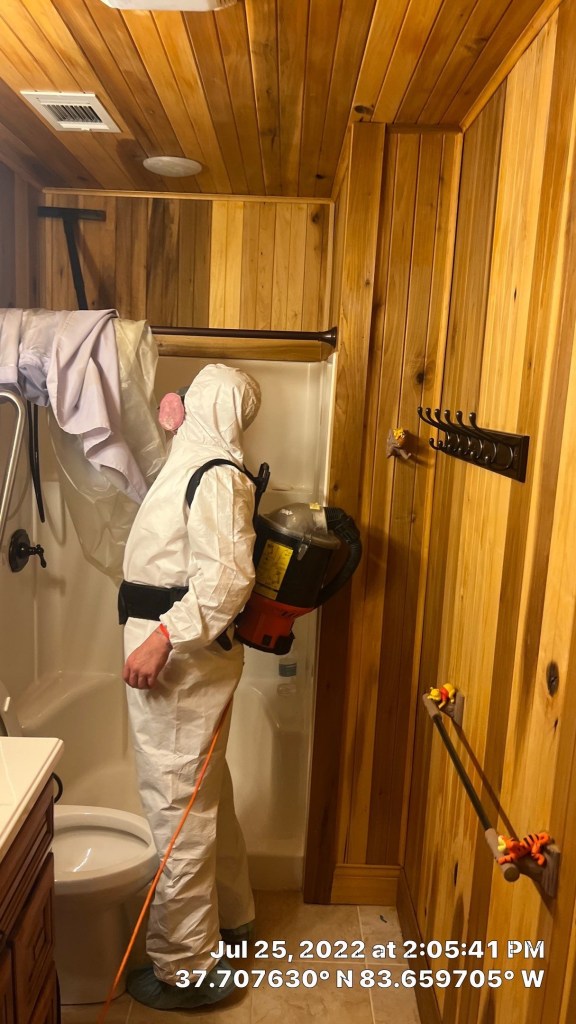
Mold Remediation At Wolfe County Kentucky Whether you live in a flood zone, near a river, or a coastal line, you want to make sure you have a plan in case a problem occurs. Water damage needs to be addressed as soon as possible, as the accumulation of water can rapidly ruin walls—including both the paint and sheetrock as well as floors and create mold and bacteria buildup. Dry any wet or damp areas within 24 to 48 hours to inhibit mold growth.2
Water damage restoration services offer water removal, full cleanup, dry out, and dehumidification and restoration of the property, including personal belongings. In some instances when the water has damaged the structure of your property, walls may need to be taken down and carpets may need to be removed. In others, some water damage restoration services companies may even offer full repair and reconstruction services. To make things easier, here are the best water damage restoration services.
-
cigarette odor removal, cigarette smoke odor removal, fire damage restoration, lexington, kentucky, mold damage, mold inspection company, mold remediation, mold removal, mold removal service, mold testing, odor removal, richmond,Kentucky, smoke odor removal, soot removal, water damage cleanup, water damage cleanup company, water damage mitigation, water damage mitigation company, water damage restoration, water removal service near me, water restoration company
Flood Damage Restoration Company
You’ve came to the best flood damage restoration company in Kentucky.
☎️ Call (859)302-2702
The Advantages of Doing Business with Our Water Damage Restoration Company
As you are about to learn, there are many advantages to doing business with the top of water removal service in Kentucky. Not only do we provide the best emergency services in the area, but we also offer a wide range of other perks for you to enjoy as water damage restoration specialists. Doing business with us make sense because:
• We are a locally owned company in the Kentucky community – one of the most important things to consider when doing business with a water damage restoration company is finding one that you can trust. By doing business with us, you are choosing a local water damage mitigation company with an excellent reputation in the Kentucky business community. We have worked hard for many years to establish ourselves as a credible certified water removal company. Our years of experience and expert technicians will make it simple for you to realize that we are the best company to meet your property damage restoration needs.
• We use specialized equipment – as water removal experts, our years of experience, plus expert certifications, make us the ideal choice in many respects. We also bring specialized equipment to the table. Our equipment is necessary to help expedite the cleanup process. Not only will it help to make drying out your property a snap, our expert specialized equipment can also help speed up the cleanup and repair process as well. We use chemical cleaners, dehumidifiers, drying agents, and much more. At the end of the job, you’ll be glad that you chose us because of our years of experience and access to the top-notch equipment that comes as part of the package.
What is Water Damage?
Before we get into steps to take after water damage, first, what exactly is considered water damage? Water damage can be defined as water destroying the interior of your home. It can be caused by a multitude of occurrences including:
• A frozen pipe that bursts and saturates your walls/ceiling
• Rain that leaks in through your room, causing damage to your walls and ceiling
• An overflowing sink or toilet that soaks your bathroom floors
• Leaking appliances, such as a dishwasher leak
• Sewage Damage
Immediate Steps to Take After Water Damage In Your Home
1. Call Your Insurance Company
Your homeowners’ insurance will vary depending on what policies you have. The insurance company will send an adjuster to look at and assess the damage and determine if it is a covered loss.
Document the values of each and every item you can think of and take as many photos as possible before, during, and after cleanup. This will help the adjuster when he or she is able to come assess the damage.
Note: Not all home insurance policies cover flood damage.
2. Protecting Yourself, Appliances, and Valuables
The most important step in any major home disaster like flooding and water damage, is to make sure yourself and your family are safe. There are several things you can do to stay safe in your home.
Turn off the power
Water and electricity obviously do not mix. But, if turning off the power requires you to enter or stand in wet areas it is best to leave it alone and call an electrician. Do not reenter a flood damaged home before turning the electricity off.
Wear Protective Gear
Be sure to wear protective clothing–such as rubber boots and gloves–when you re-enter your home. This will protect you from injuries that can get bacteria filled water in them.
Protect Your Valuables
You can lift wood furniture off the wet carpet areas and insert tin foil under the feet to prevent staining of the carpet. Likewise, remove any rugs that may be on wet flooring.
You may be forced to leave your home if the flooding is bad enough. Make sure it is also safe when you return to your home to begin dealing with the aftermath. Don’t drive through any flooded areas!

Dont Let Water Damage Destroy Your House
Call For An Inspection: (859)302-2702
We Servere:
Lexington, Kentucky
Richmond,Kentucky
Newby,Kentucky
Nicholasvillle,Kentucky
Georgetown, Kentucky
Winchester, Kentucky
Follow Me On
Subscribe To My Newsletter
Subscribe for new travel stories and exclusive content.
 Water Damage Mitigation Company In Winchester KY